Syncing product architecture with user intent
CLIENT
CLIENT TYPE
Residence management app
PROJECT TYPE
UI/UX, visual design, branding, mobile app, design audit
YEAR
2026
PROJECT ROLE
Product & visual designer
PROJECT CONTRIBUTION
Stakeholder analysis
User research
Wireframing
User flow mapping
App layout
Rapid prototyping
Branding & visual design
TOOLS
Figma
Adobe Illustrator
Adobe Photoshop
COLLABORATORS
Sanya Gupta,
Product & visual designer
Context
Stanza Living is a pan-India PG franchise.
It aims to handle all accommodation & food logistics for working professionals who have to relocate.
Problem
Their mobile app is the primary POC for residents to manage their services.
But many residents are often dissatisfied with the service.
Intervention
This project aligns the mobile app with the user's intents by:
Uplifting the UI design system from a functional angle & to provide a cohesive brand experience.
Restructuring the app's UX flow & revising feature priorities.
Impact
Reduced operational overhead & staff intervention.
Improved feature visibility.
Stronger brand experience & trust from users.
But first…
What is "Home" to you?
This is what was missing from the Stanza Living app.
The residents felt that the app prioritized a different agenda from what they wanted.
23 year old Saumya
Fresh from college in a similar tier-1 city.
Living off internship stipend.
Eager to explore newfound freedom.
Tech savvy.
40 year old Razin
Forced to relocate from a tier-3 city because of the job market.
Has a family with kids to support.
Works a tech job but does not incorporate technology into personal life.
01
New city feels expensive
Their accommodation & food contributes to their single largest expense every month.
02
Time crunched
They have grown accustomed to having their boarding & lodging logistics taken care of by others & want to focus on work & life.
03
Homesick
They find the new city cold & difficult to fit in, especially far from their community.
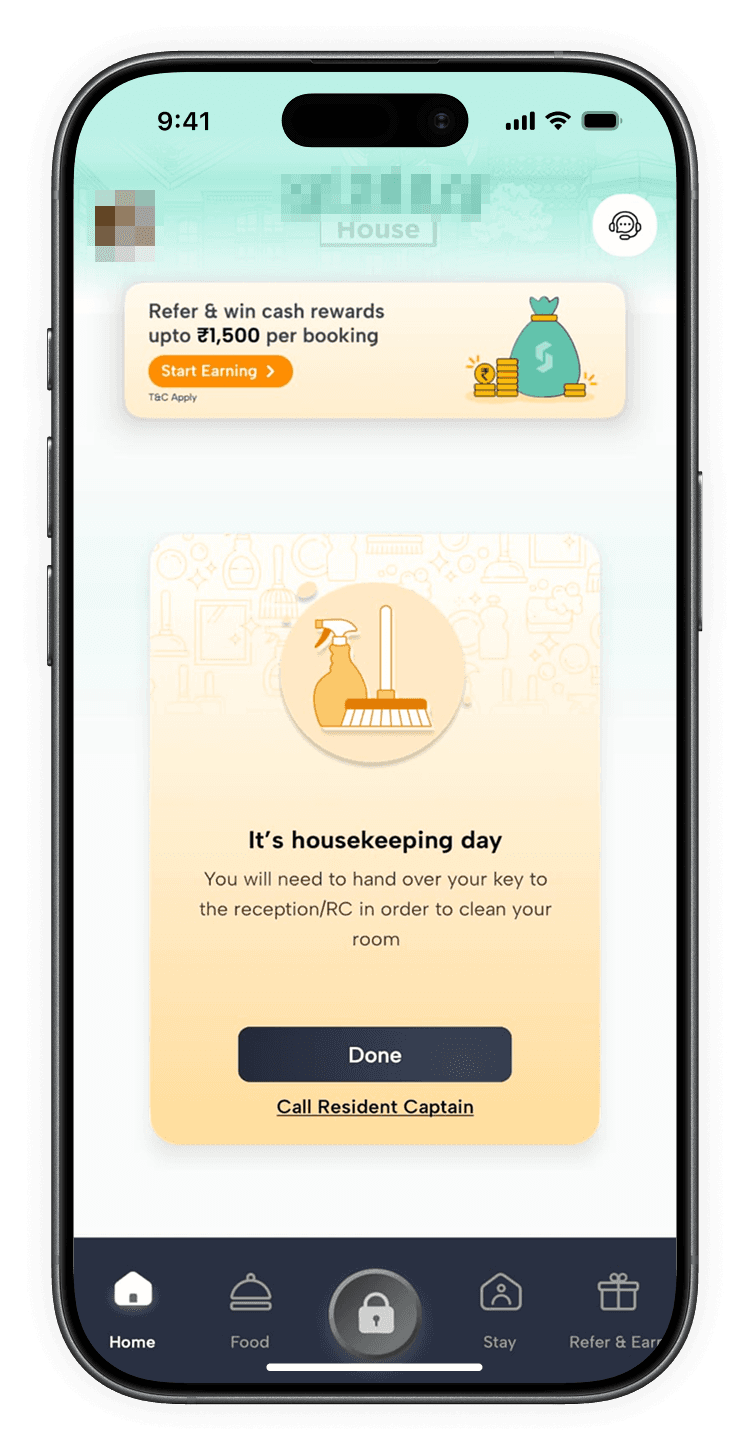
Daily
actions
Selecting meal preferences & registering food collection.
Unlocking main door on entry.
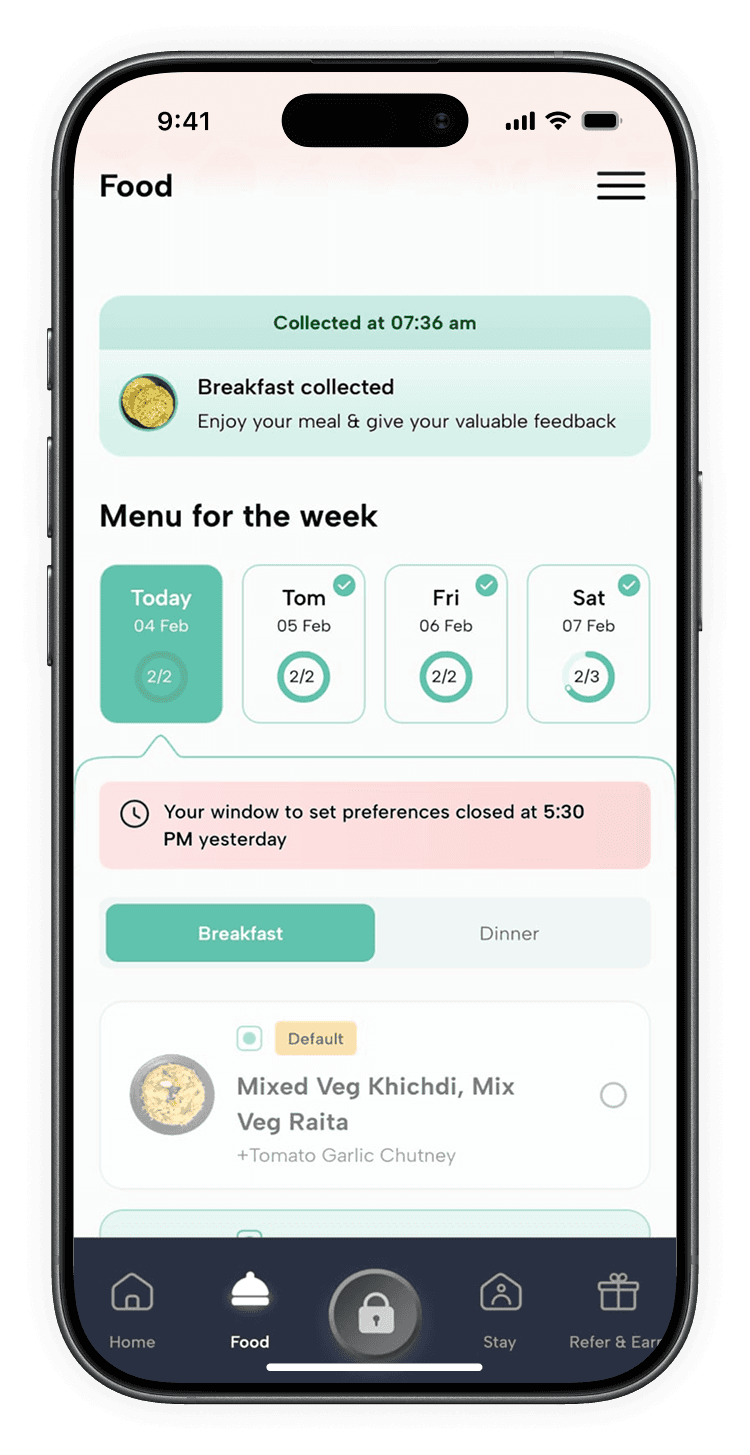
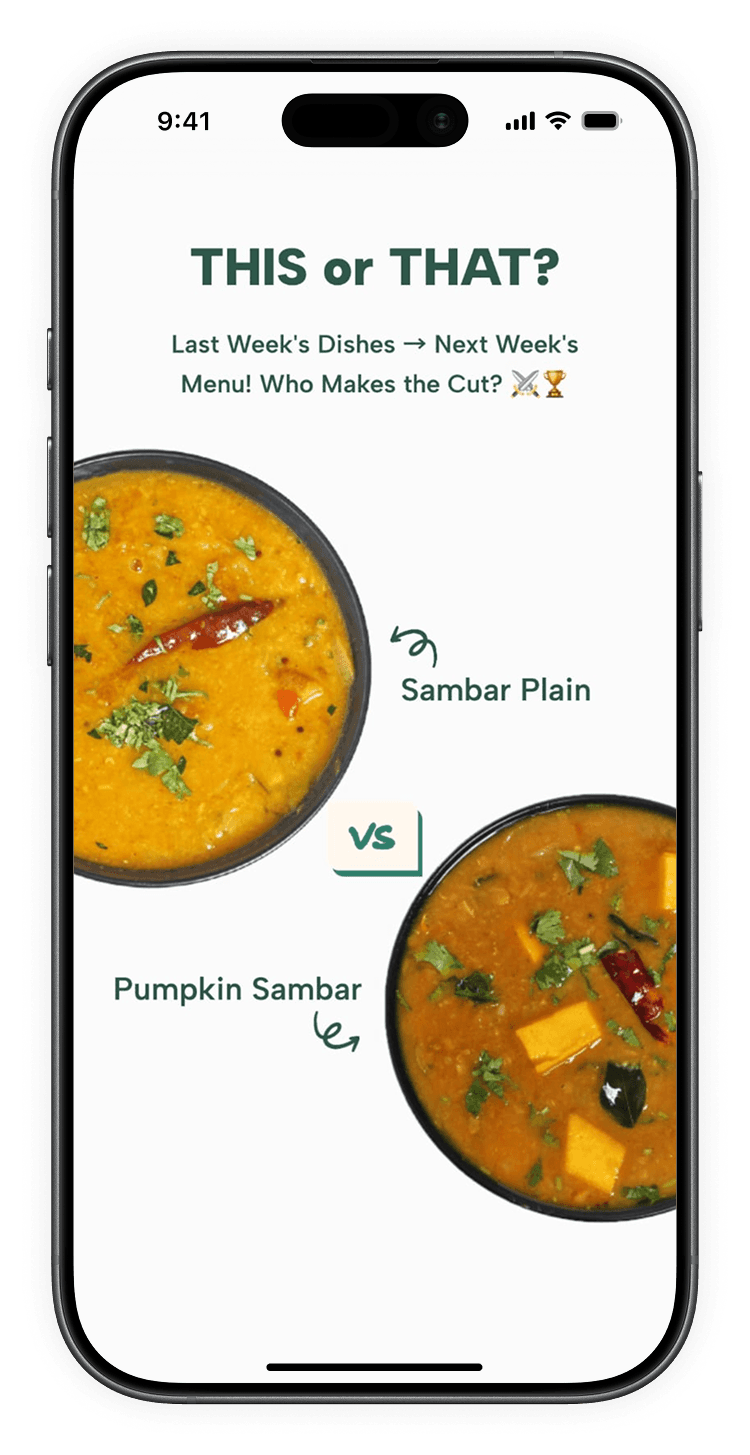
Weekly
actions
Recharging prepaid electricity meter.
Mandatory feedback on food.
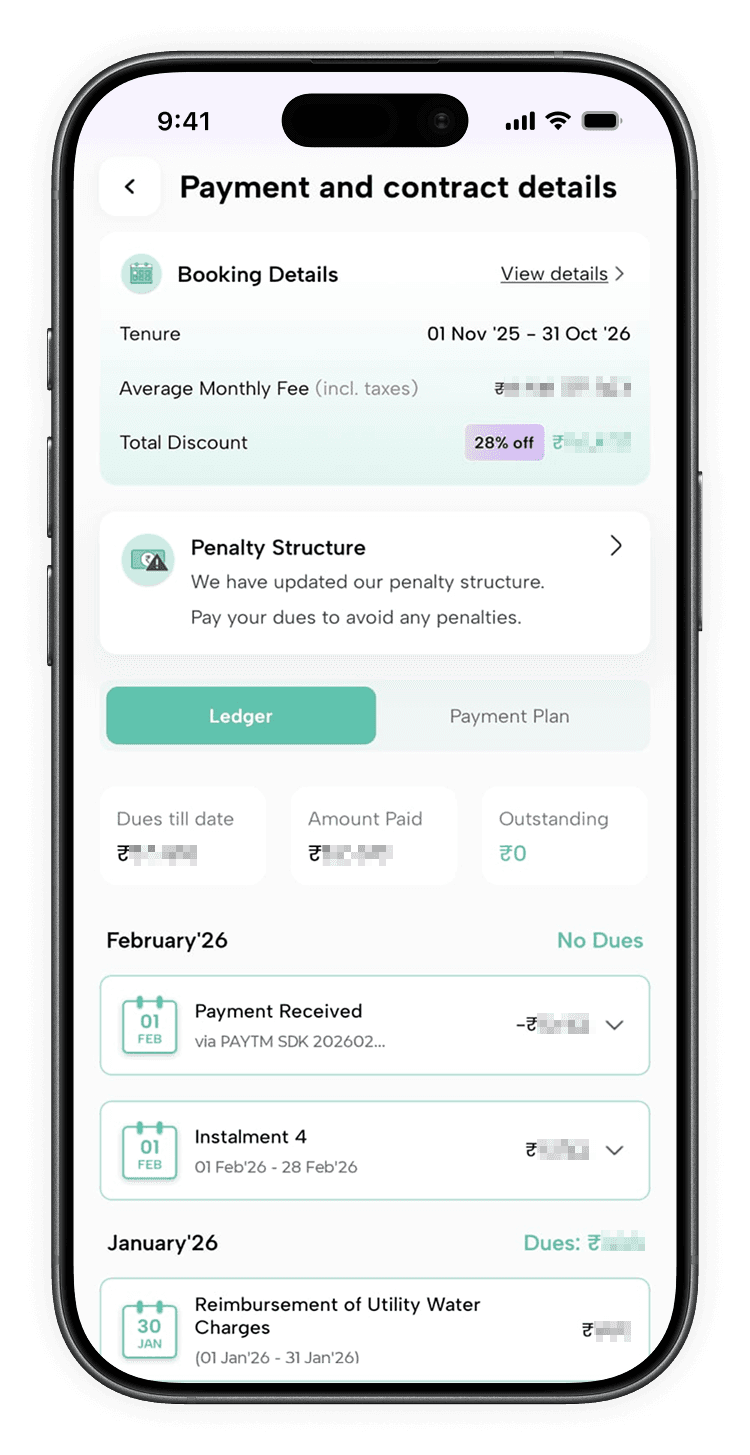
Monthly
actions
Paying rent & water usage bill.
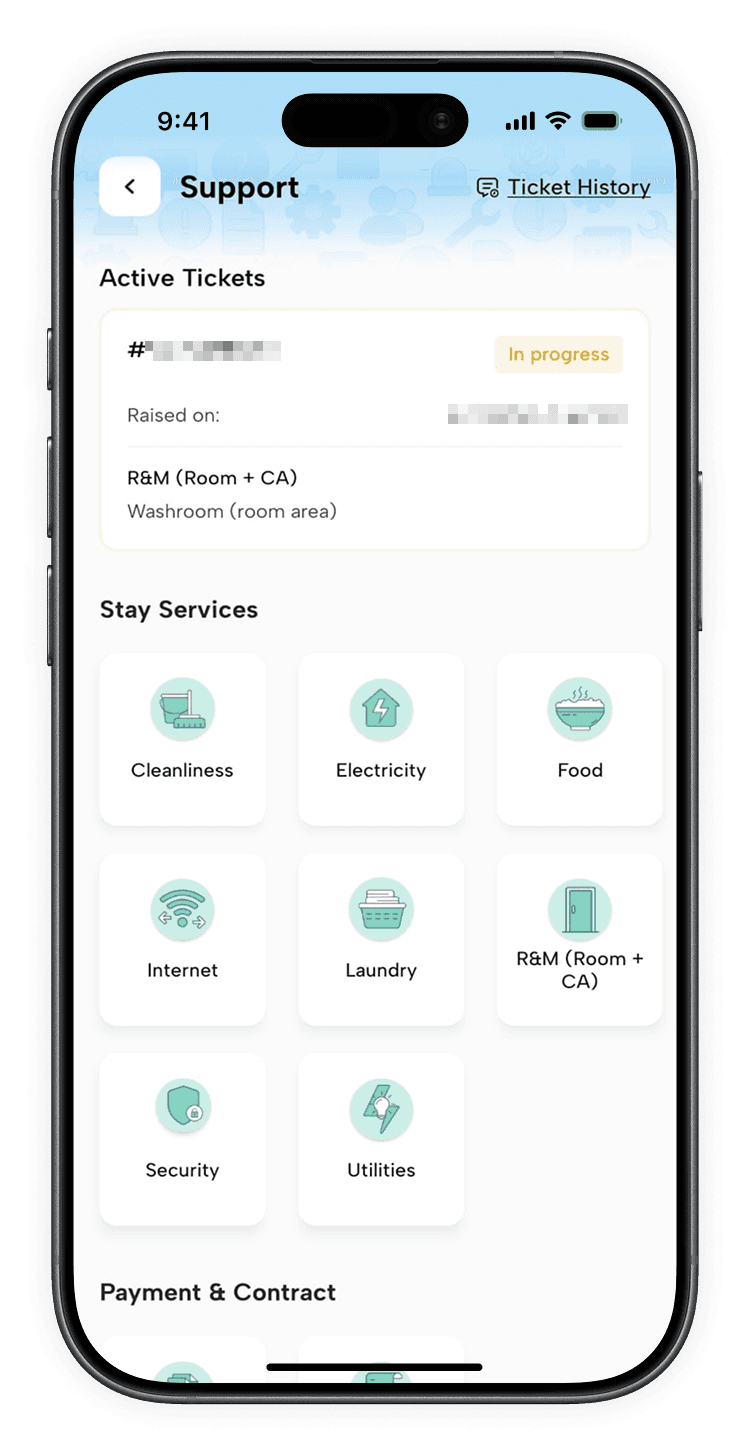
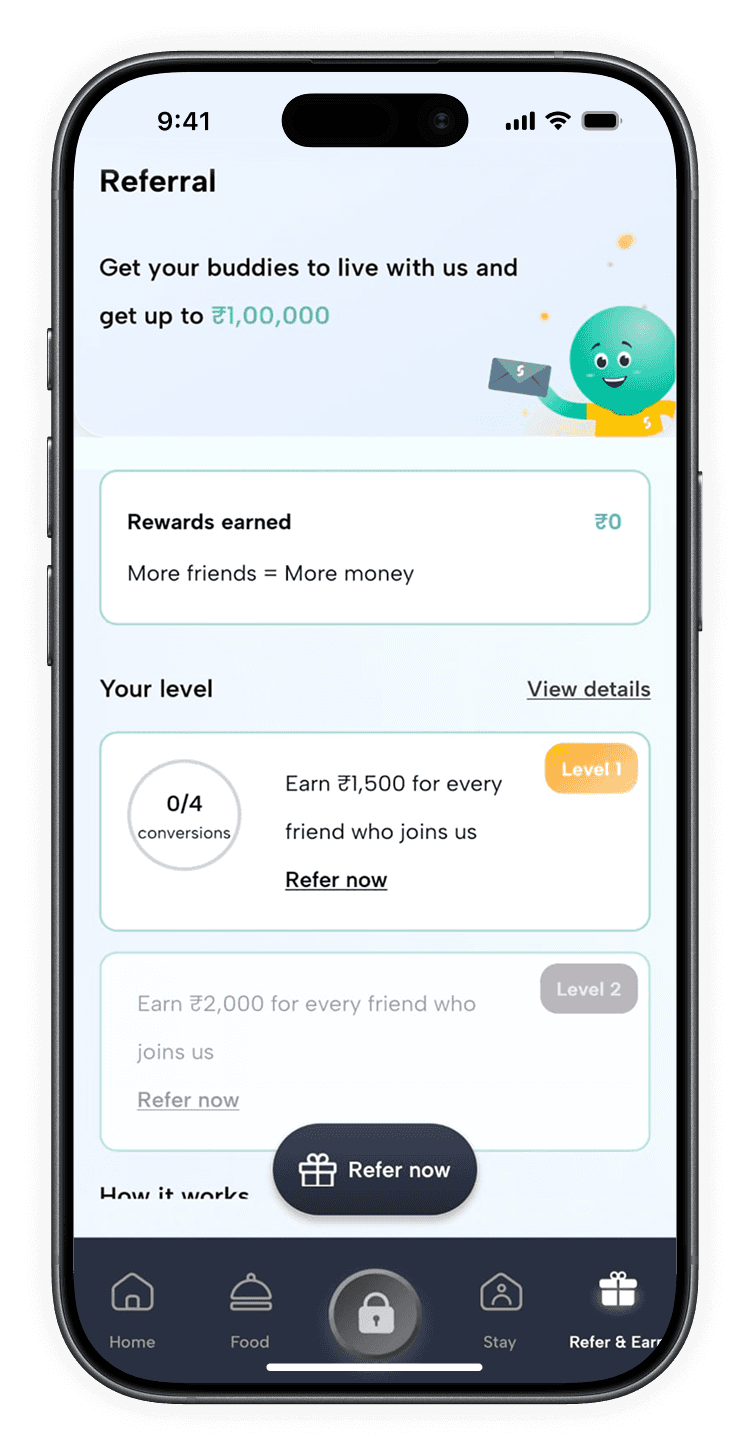
01
Confusing information architecture
Poor hierarchy & inconsistent labeling make features hard to find & service information difficult to trust.
02
Misplaced feature priorities
Rarely used actions are overemphasized while essential tasks are buried, making simple actions harder to complete.
03
Reactive instead of proactive communication
Residents often learn about service issues only after disruption, leading to confusion, inconvenience, & penalties.
04
Unnecessary human dependency
Poorly communicated or unautomated processes force staff & support teams to handle tasks the app could manage.
01
Information
relevance mapping
Action critical information
Electricity meter balance
Pausing electricity meter while away
Rent notice & reminders
Unlocking main door
Dynamic / awareness information
Food preferences
Payment status & history
Additional charges
Contract updates
Guidance-based actions
Stable / familiar information
Contract & stay details
Water availability
Housekeeping frequency
Meal plan
Amenities offered
Policy-related updates
02
Lo-fi prototypes
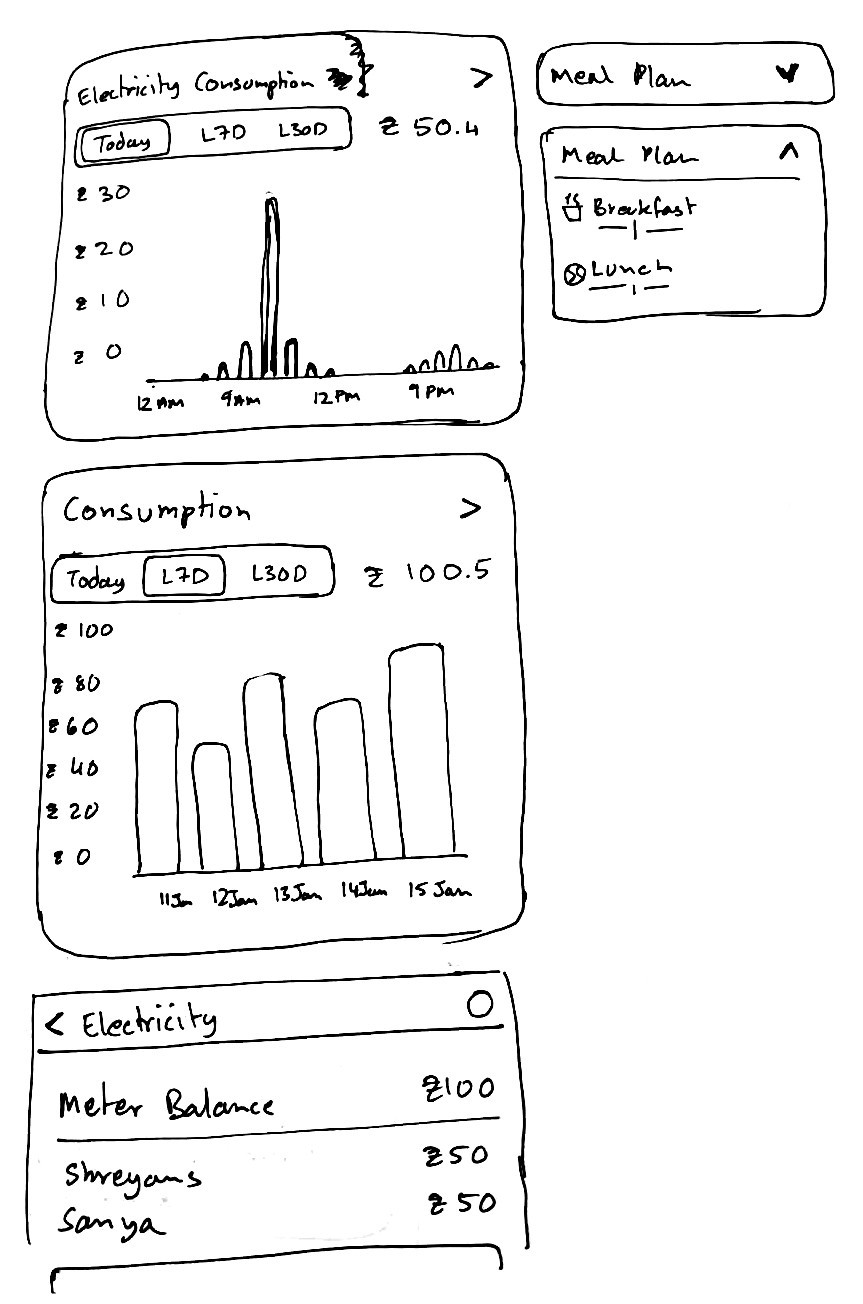
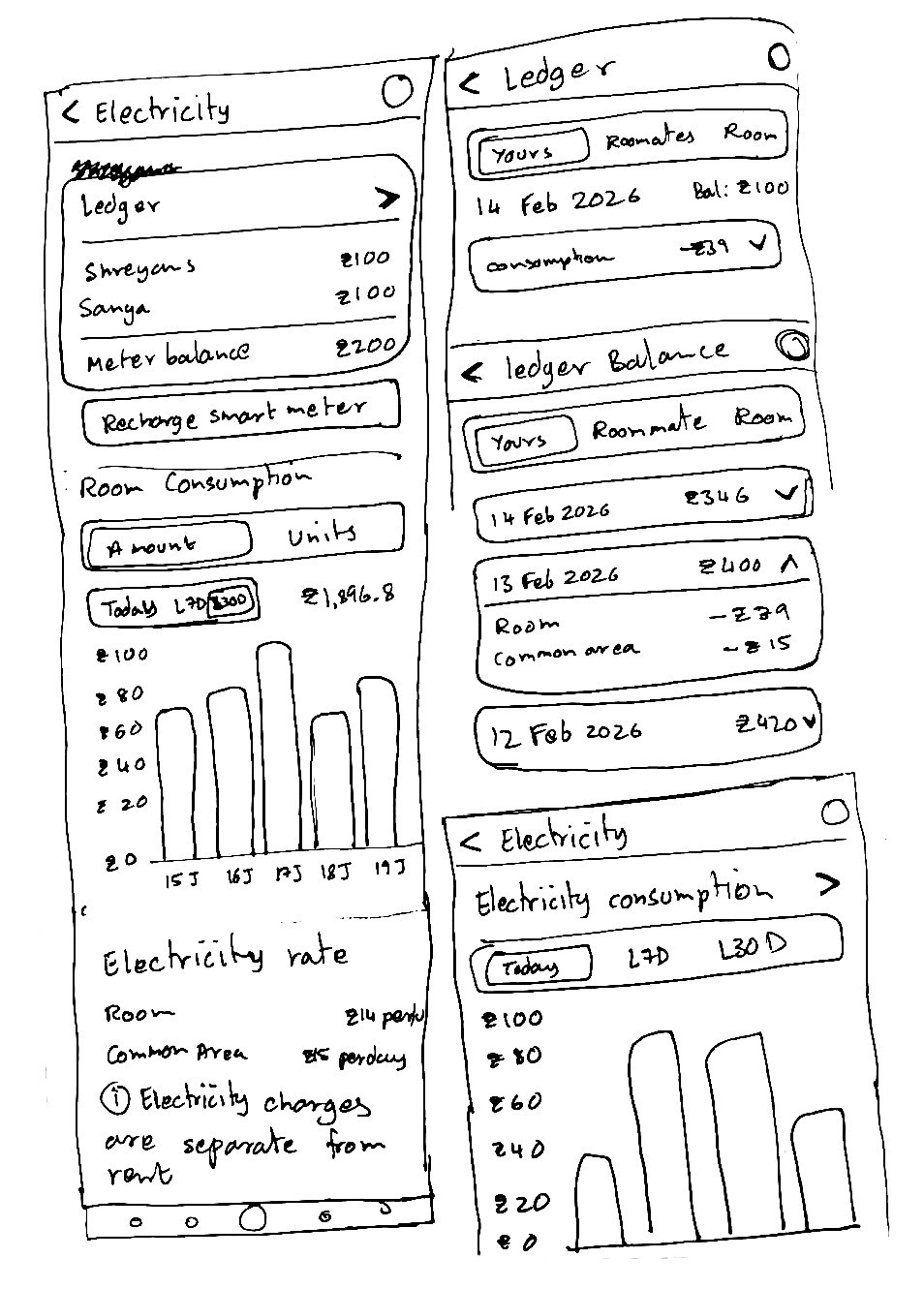
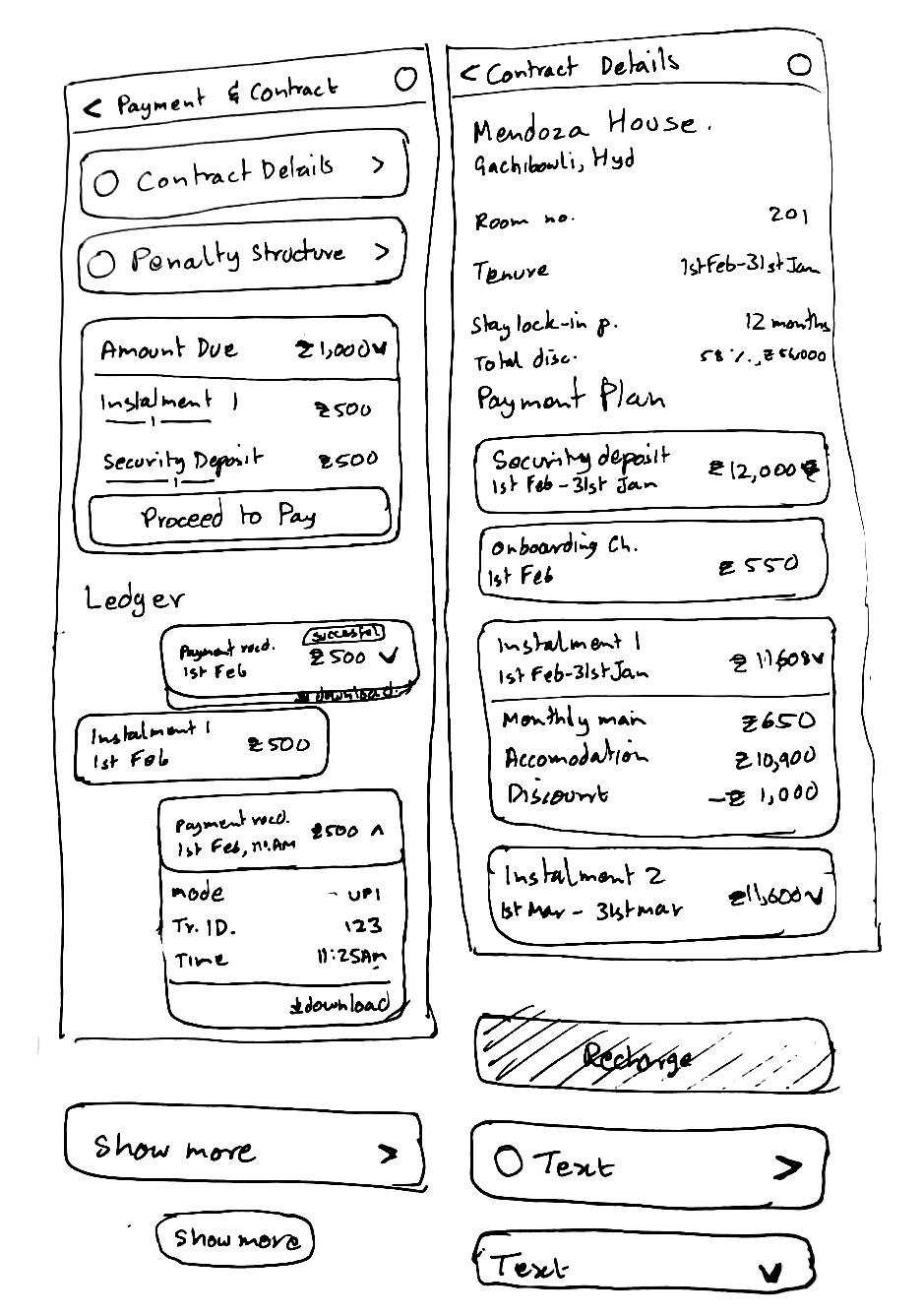
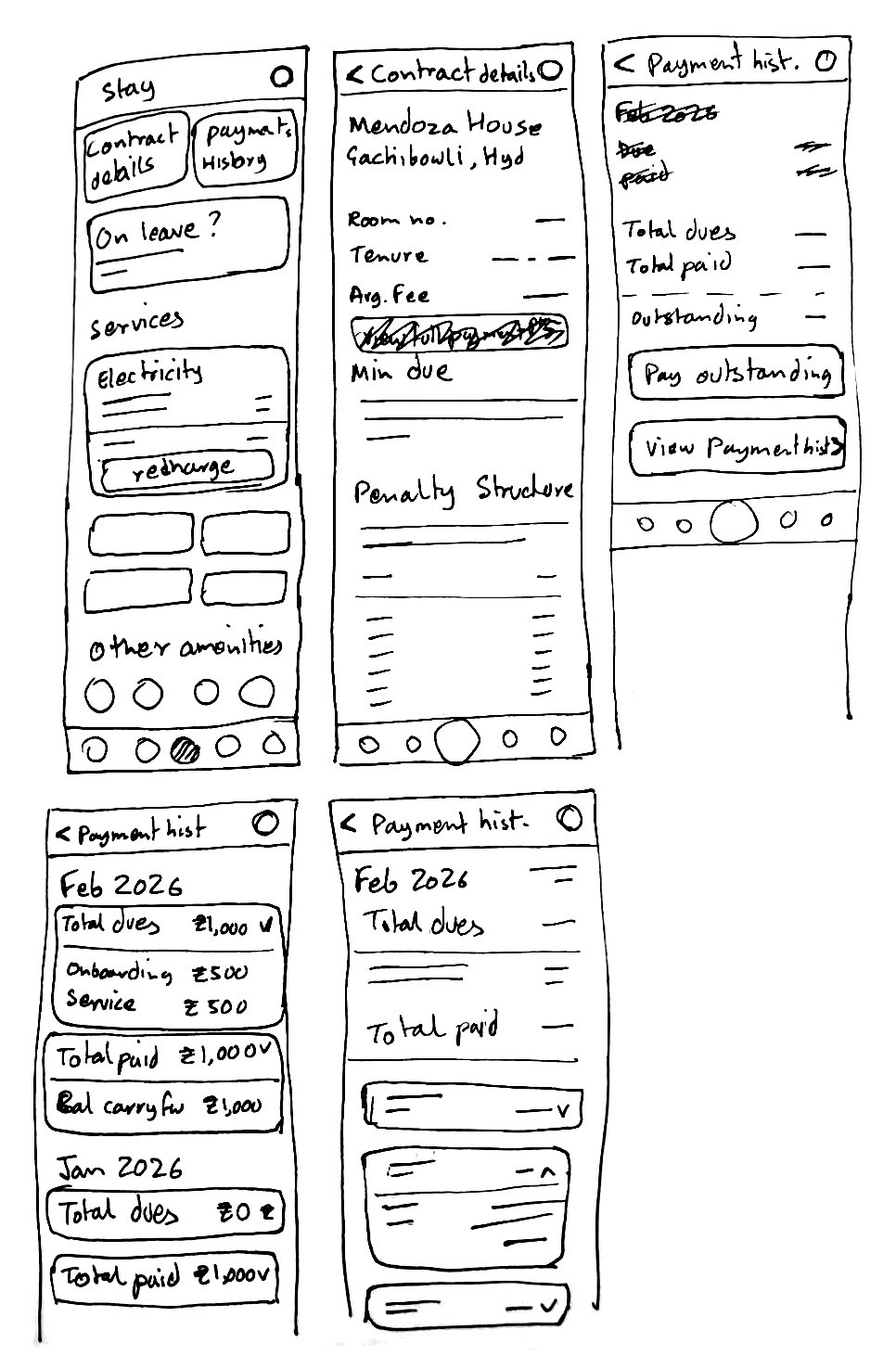
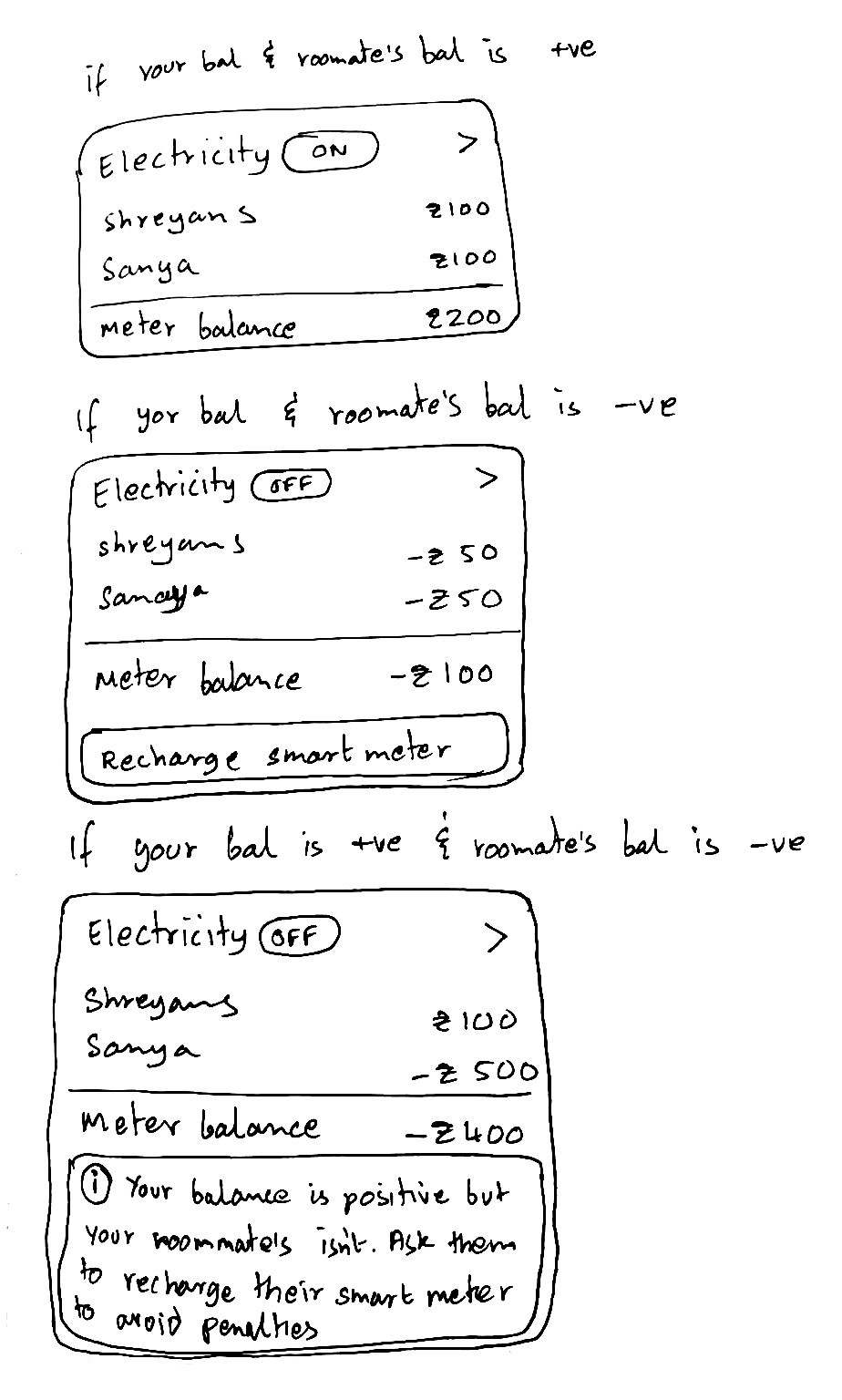
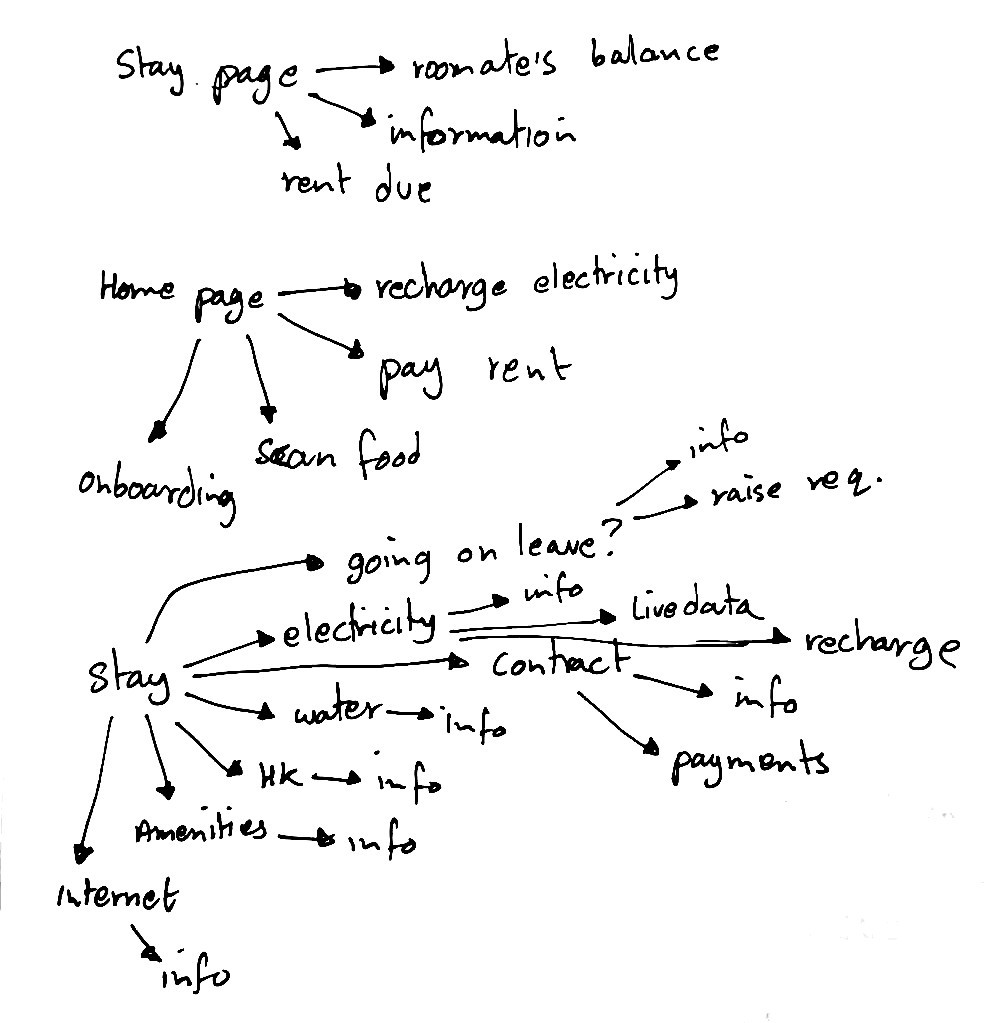
03
Mid-fi prototypes
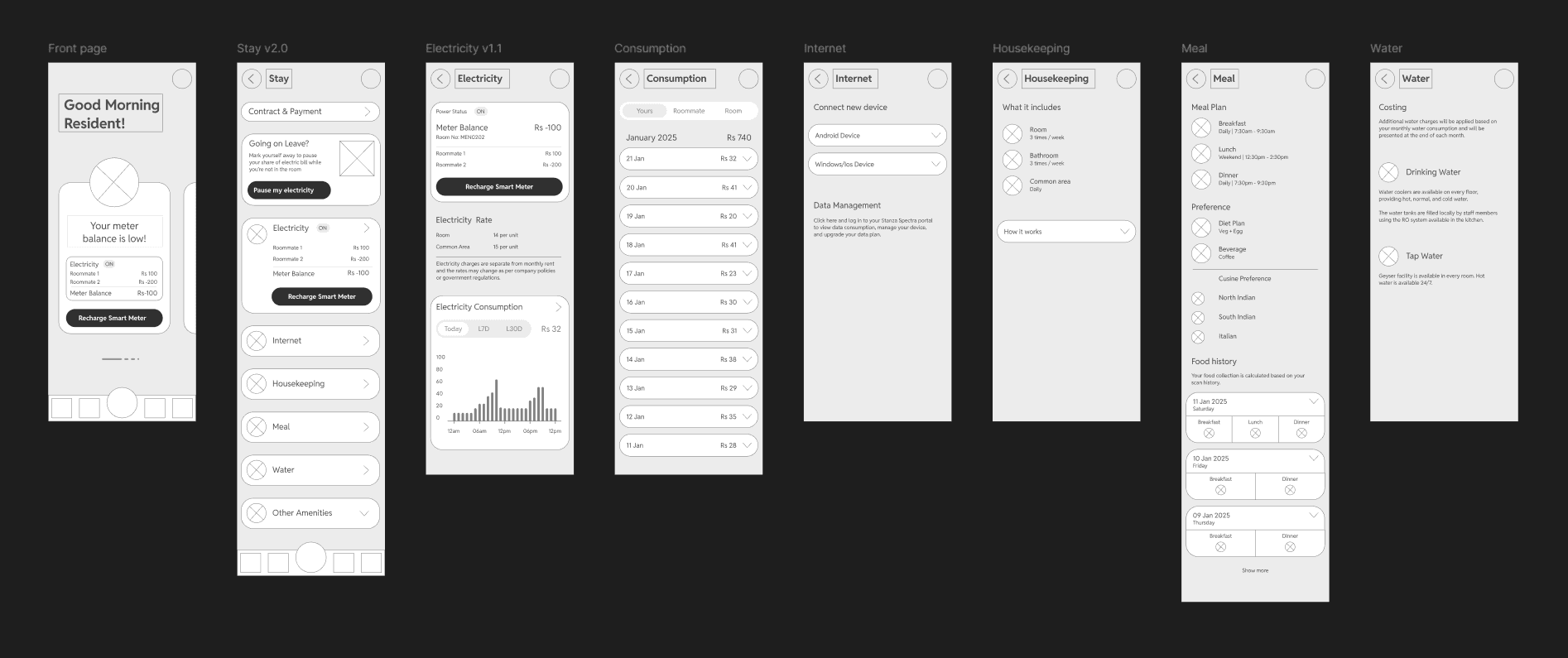
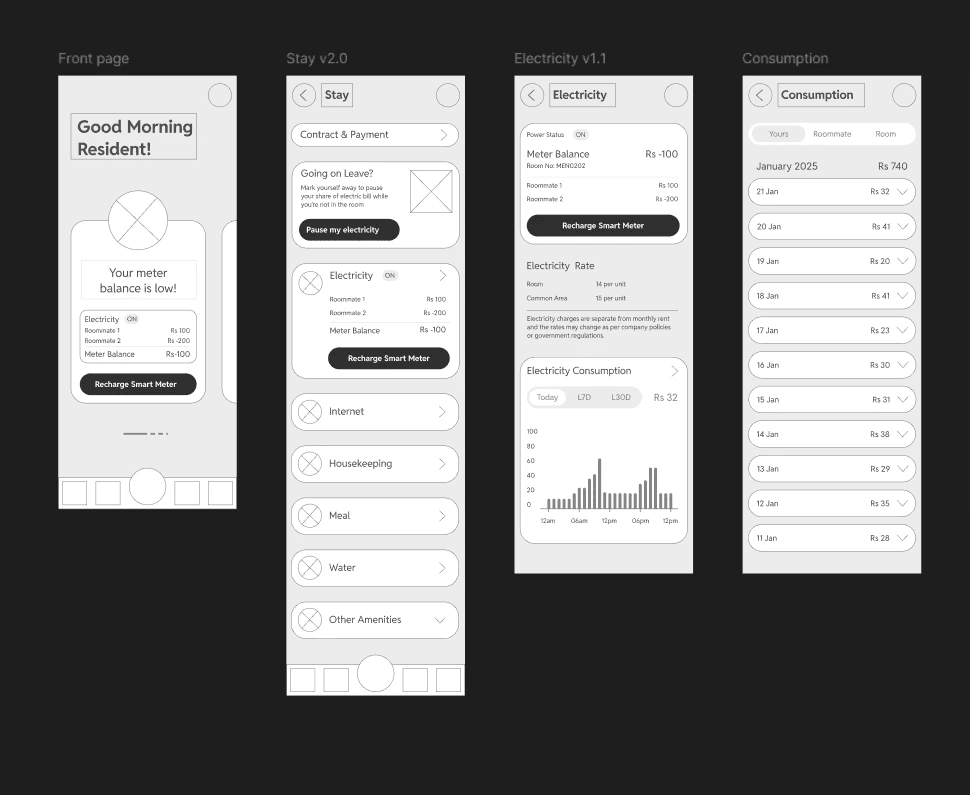
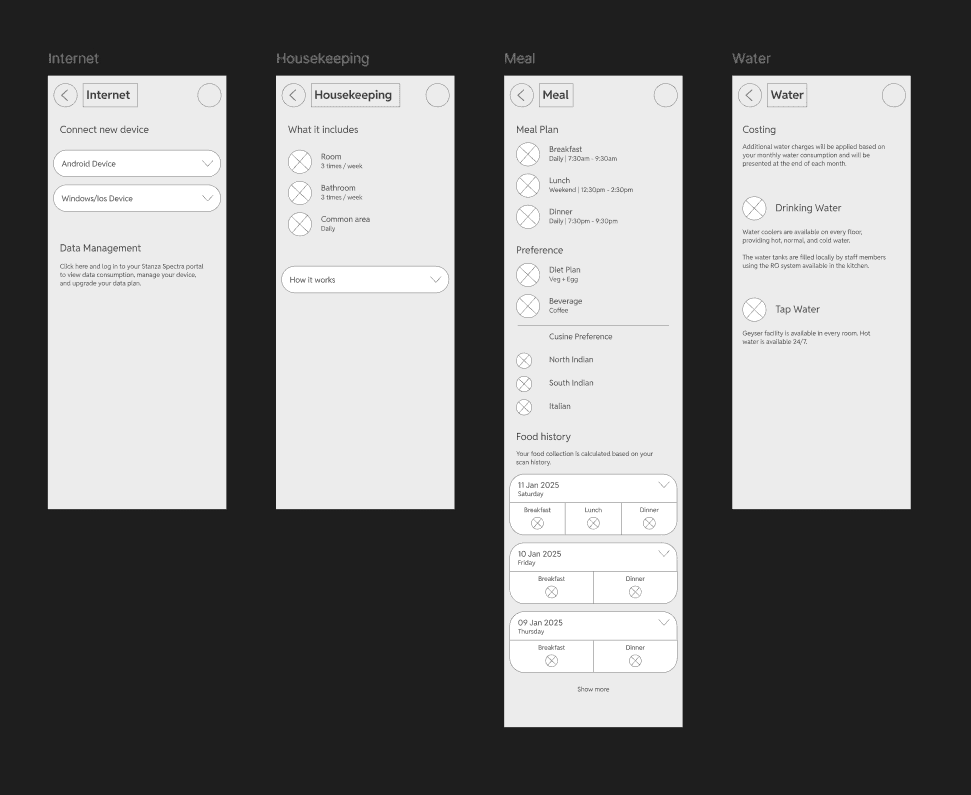
04
User feedback
This helped us course correct & validate our progress mid-way.
🧒🏻
Ravi
Stay: 1.5 years
“I could navigate to my payments easily & clearly understand the information.”
👨🏽🦲
Ben
Stay: 4 months
“I didn’t even realize there was a ‘going away’ feature before this made it very clear.”
👩🏾
Payal
Stay: 8 months
“Checking my balance & seeing my roommate’s share feels much simpler.”
👩🏻🦱
Simra
Stay: 1 month
“I mostly open the Stay page for electricity it would be great to see that upfront.”
01
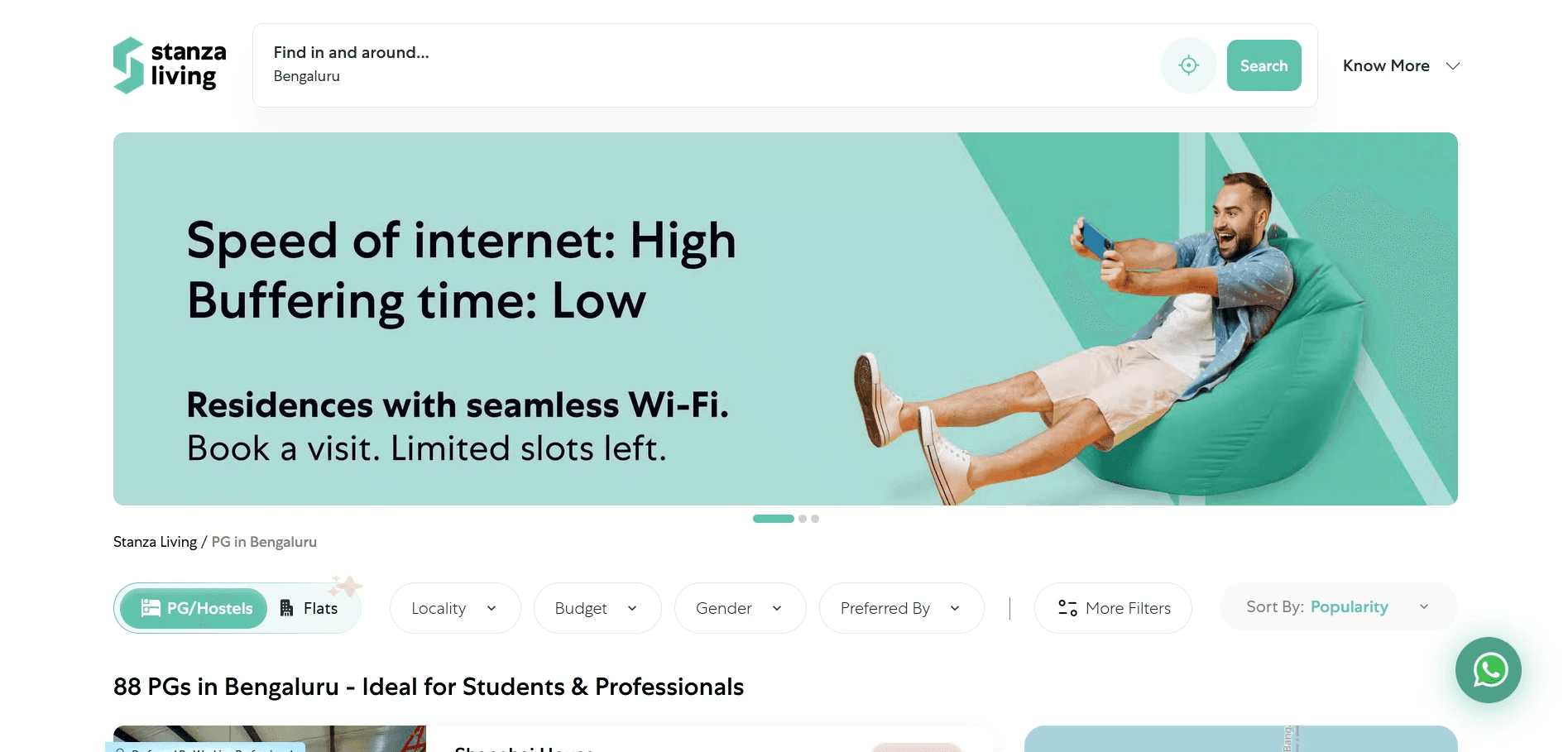
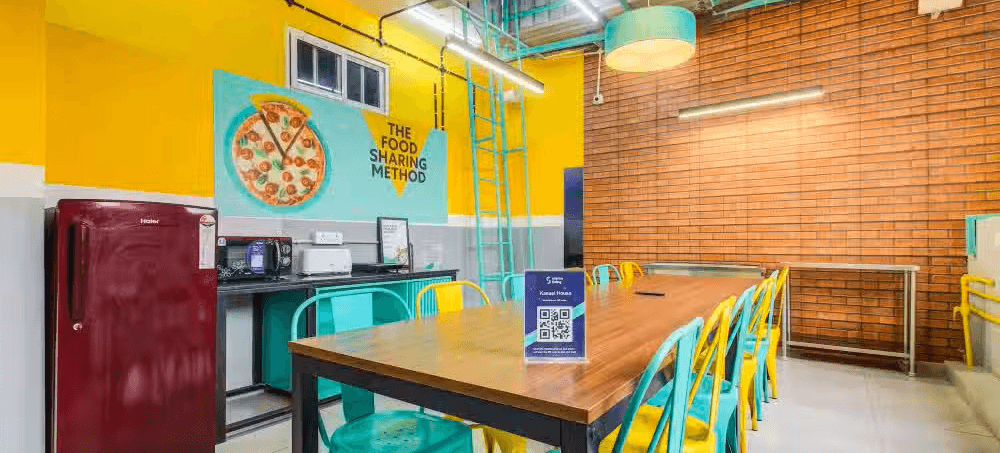
Core brand elements exist but are platform-specific
The website establishes a clear identity using teal-green gradients, dark blue, greys, & bold monochrome icons.
02
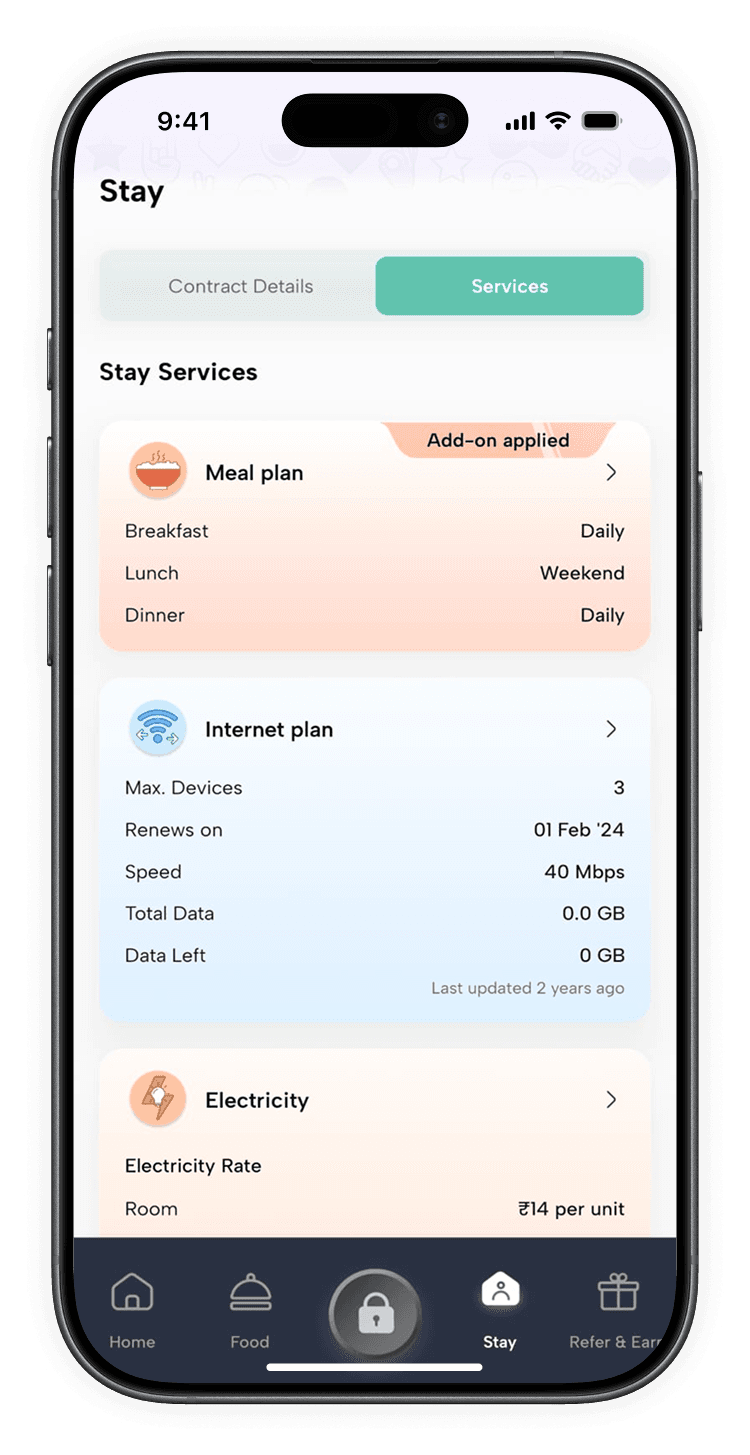
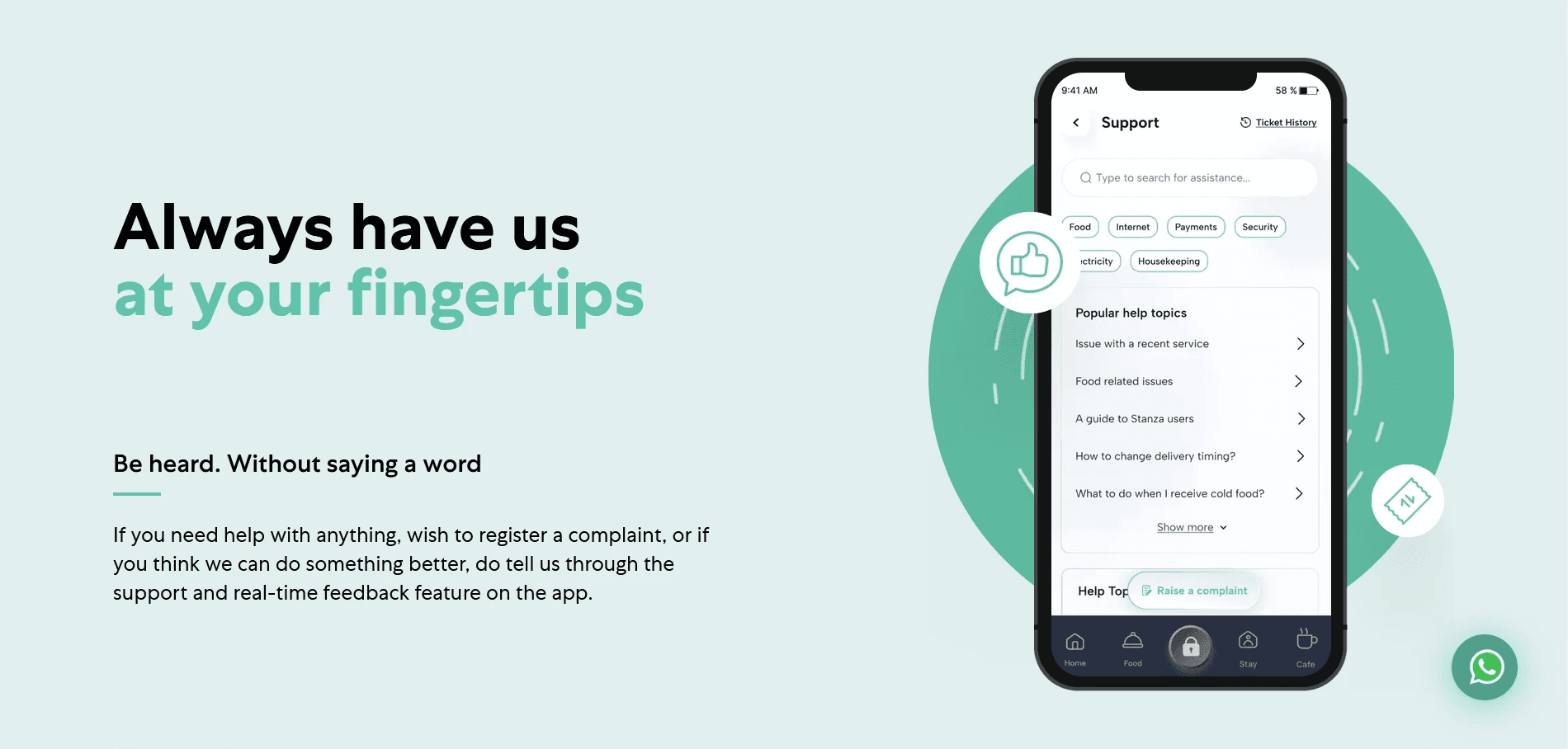
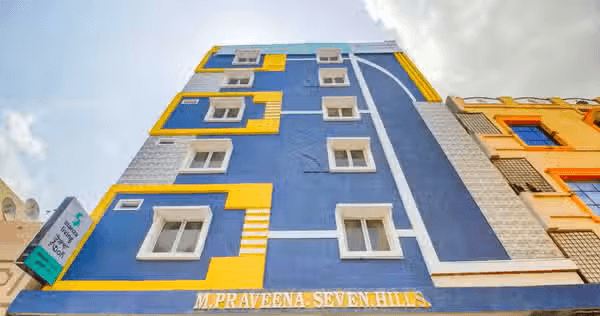
Inconsistent brand experience
The app’s visual design feels disconnected from the website & physical properties, weakening perceived quality & trust.
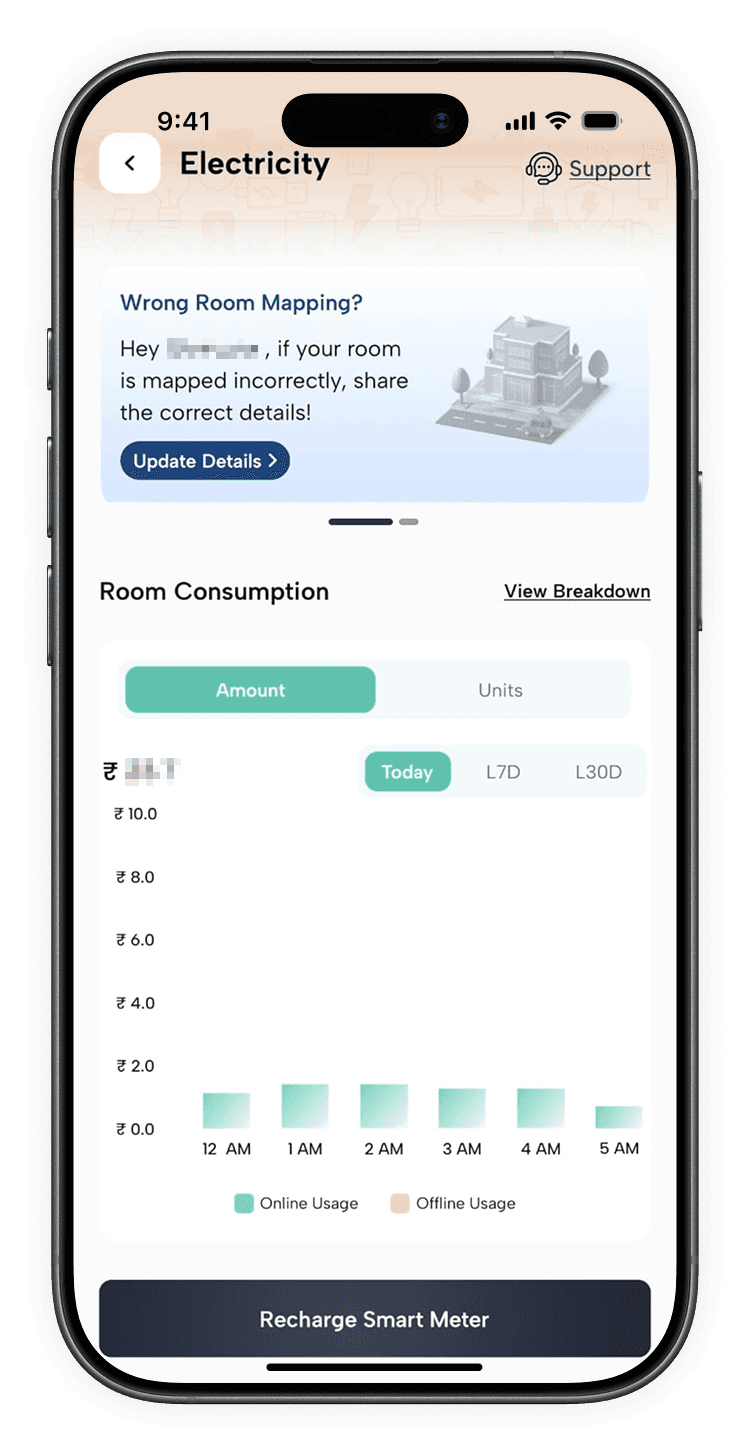
vs
vs
03
Brand mascot is underutilized
A mascot appears only in rarely used actions, missing the opportunity to build recognition & personality across the product.


04
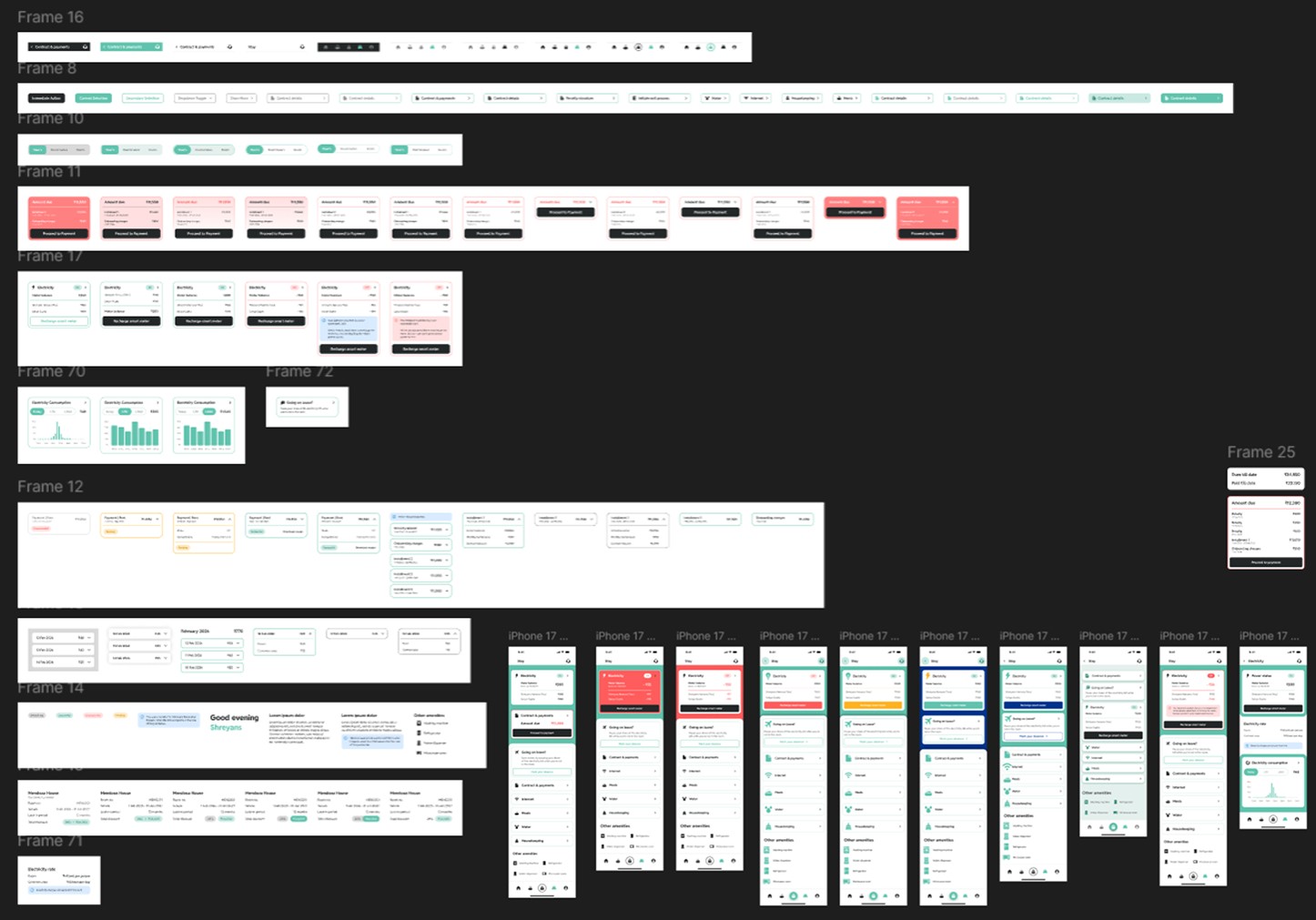
Visual design explorations
We took what worked with their platform-specific visuals & unified their communication - across styles, components & screens.
Presenting
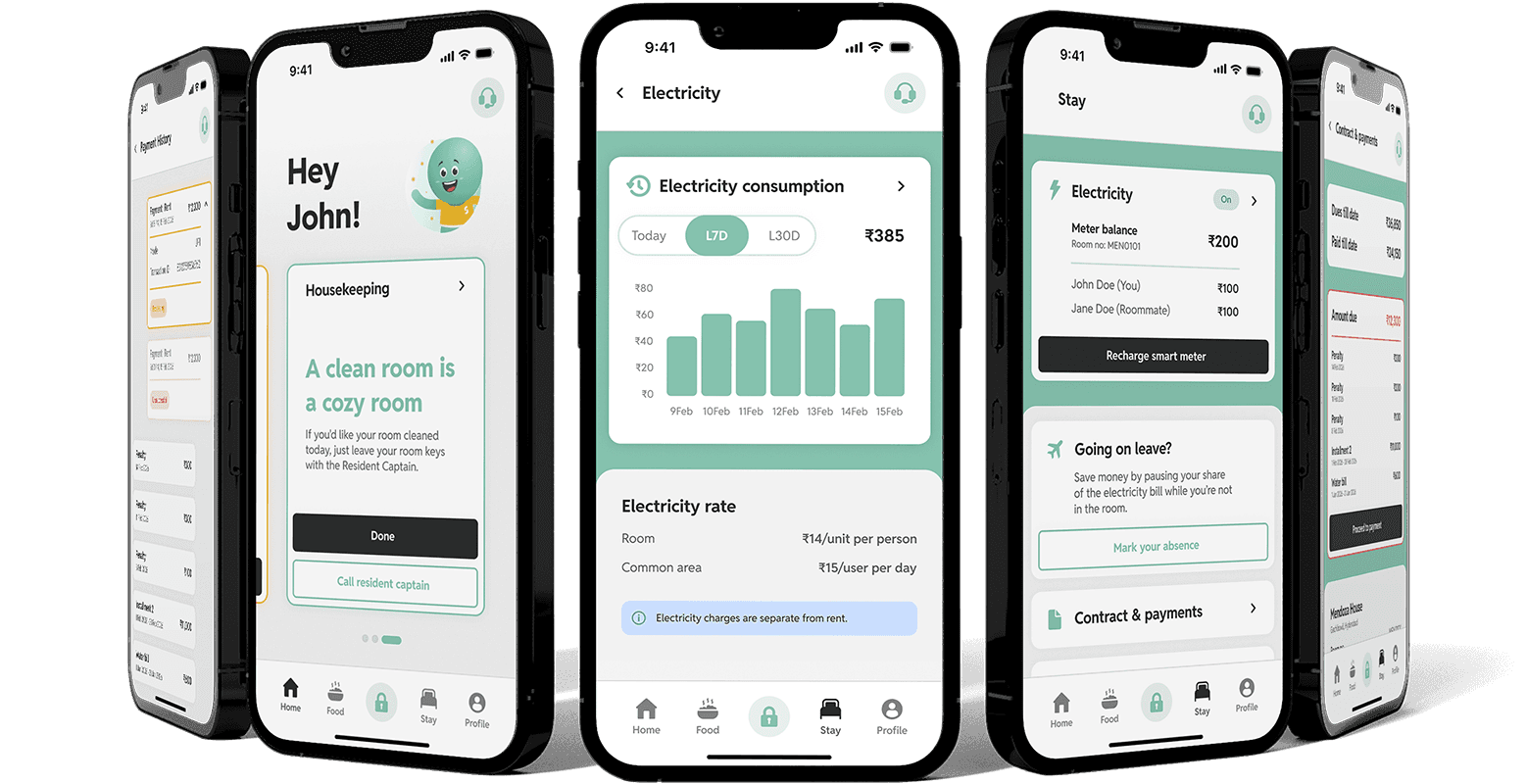
Stanza Living v2.0
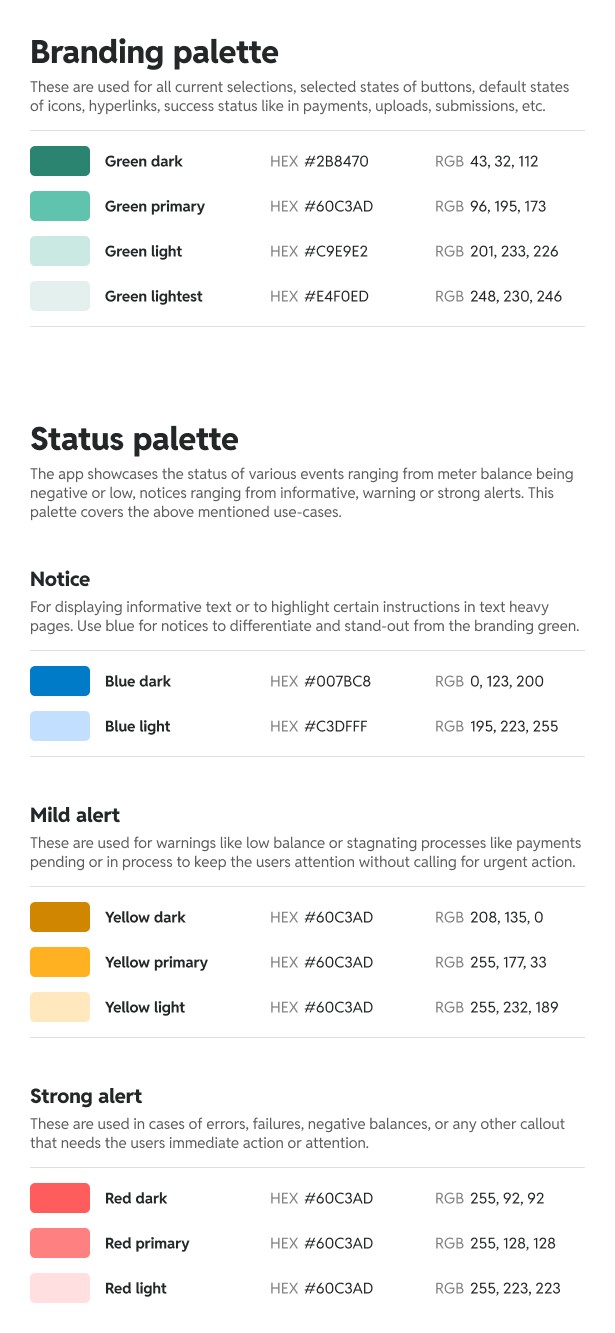
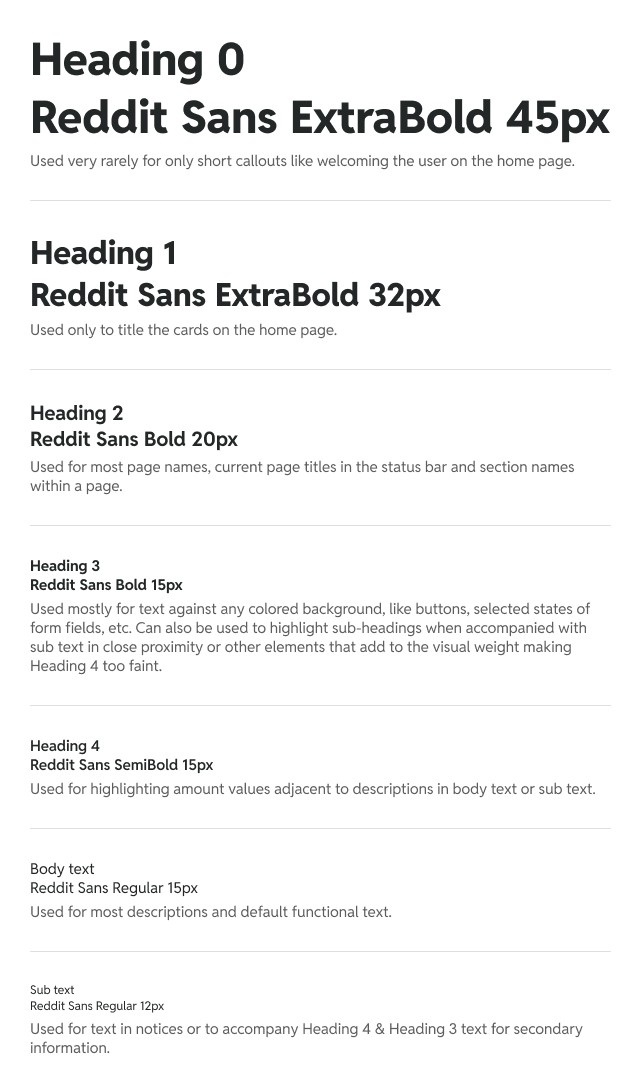
Establishing variables & styles
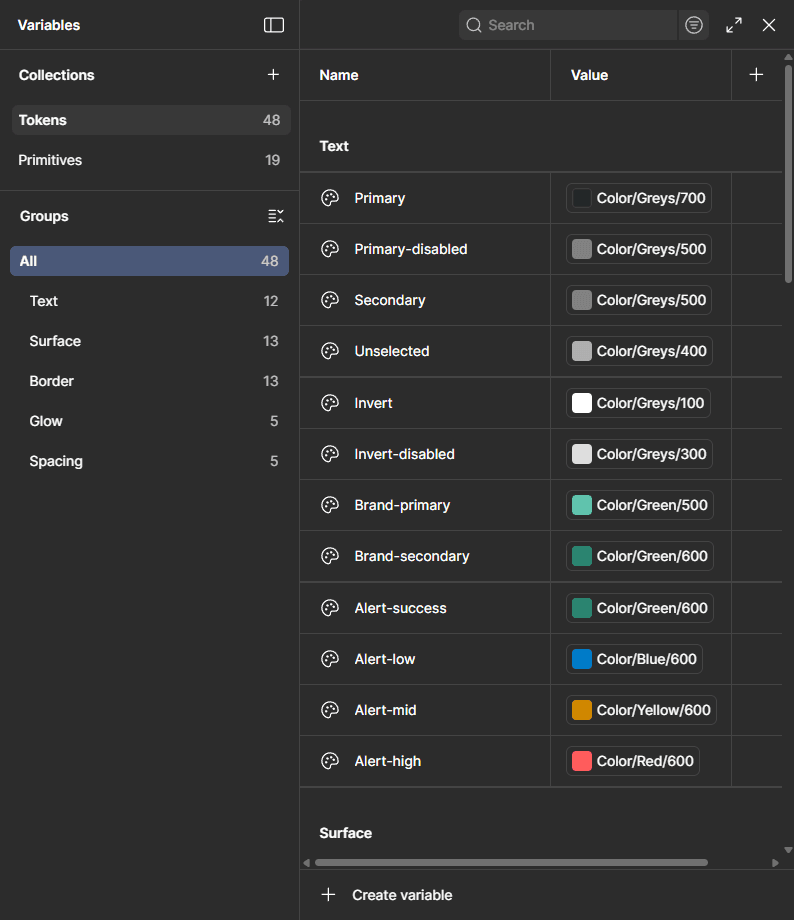
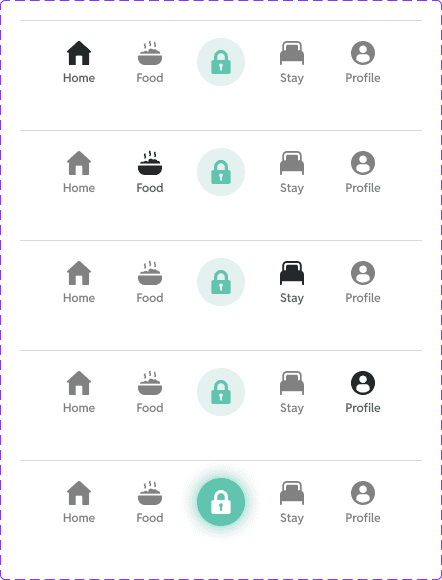
Standardizing iconography

Developing components
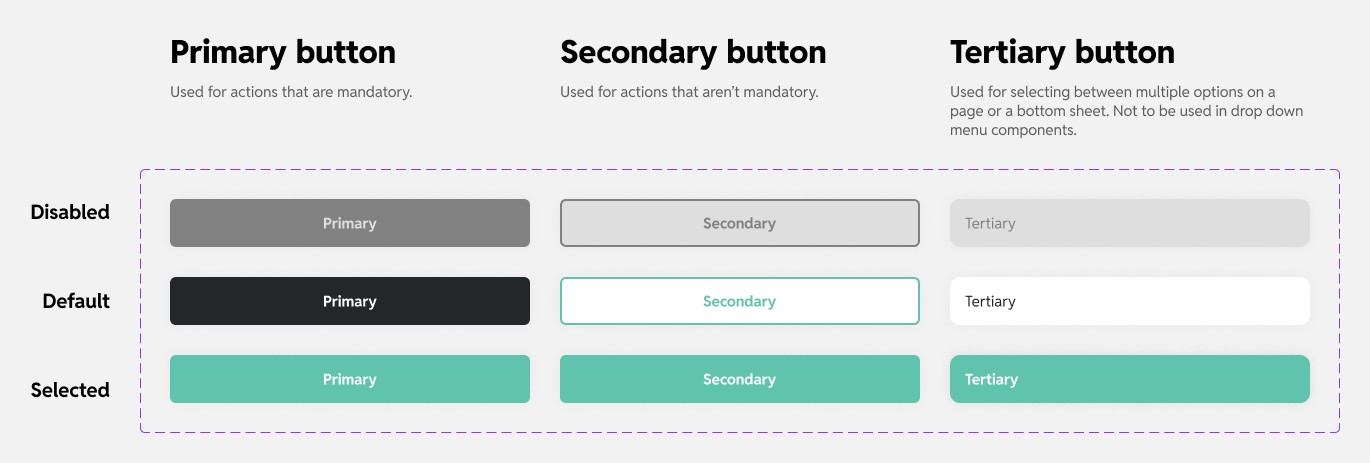
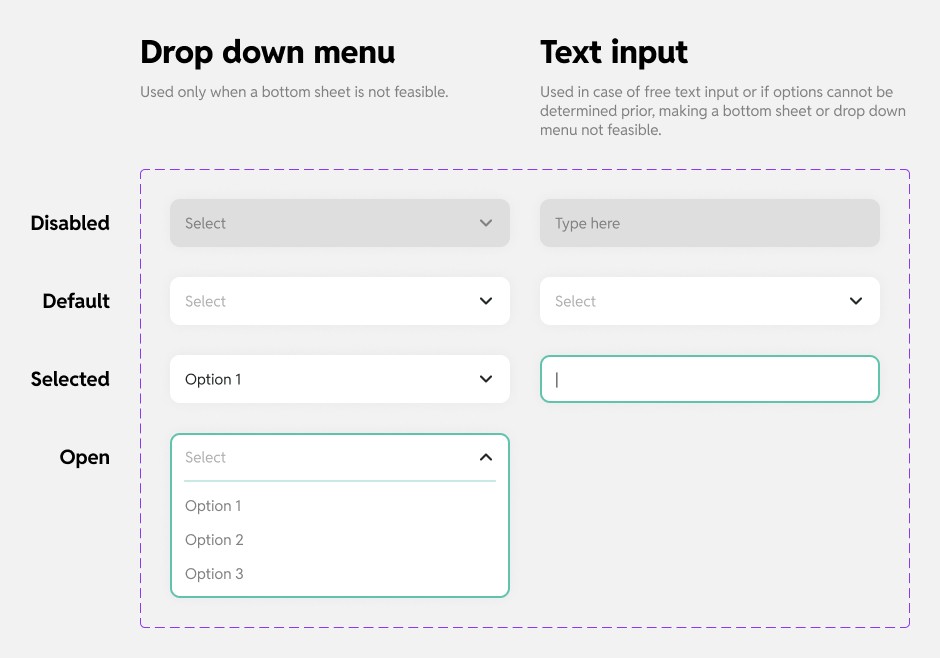
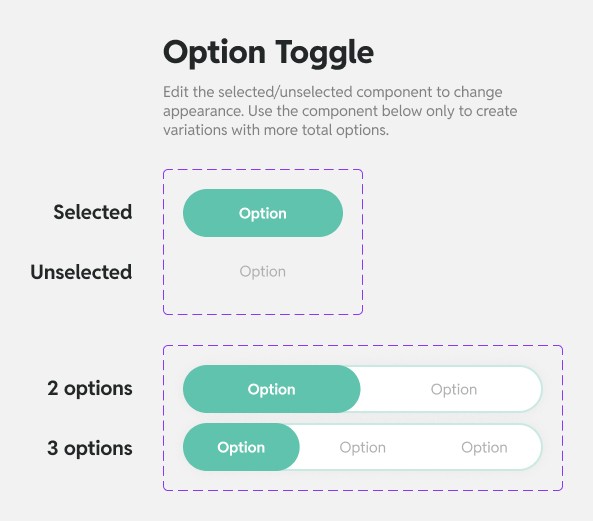
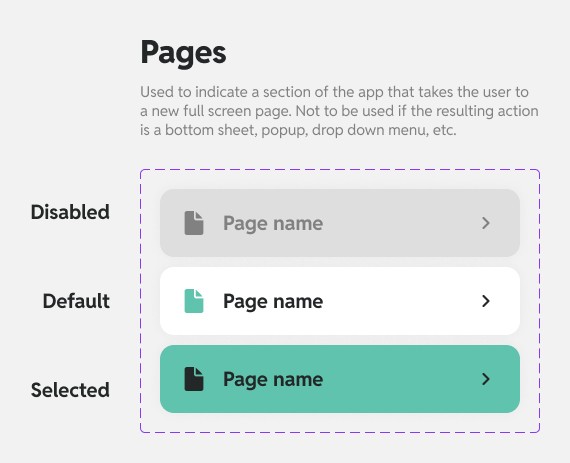
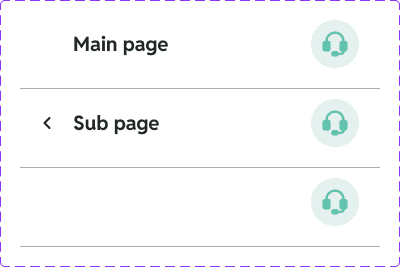
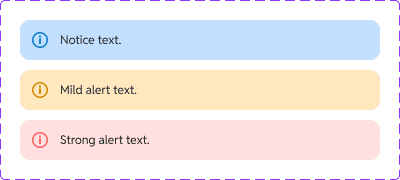
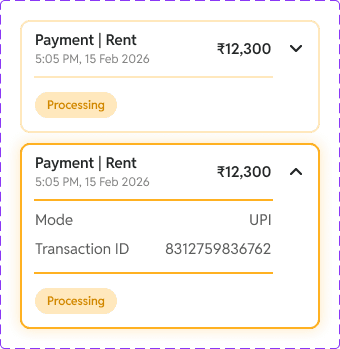
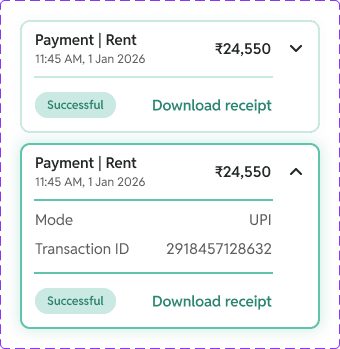
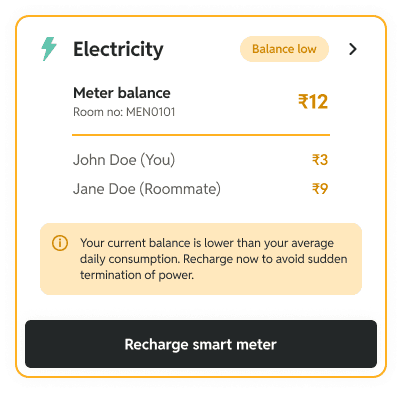
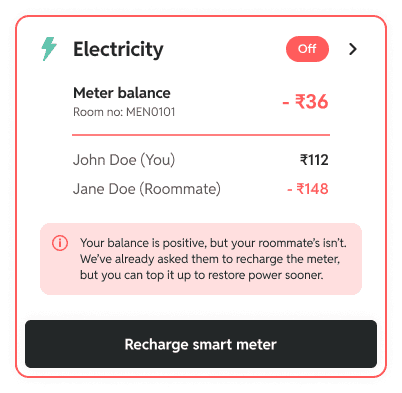
Decluttered navigation & prioritized key actions.
Functional color mapping for clearer alerts.
Introduced personalization through the mascot & regional UX writing.
Before
After
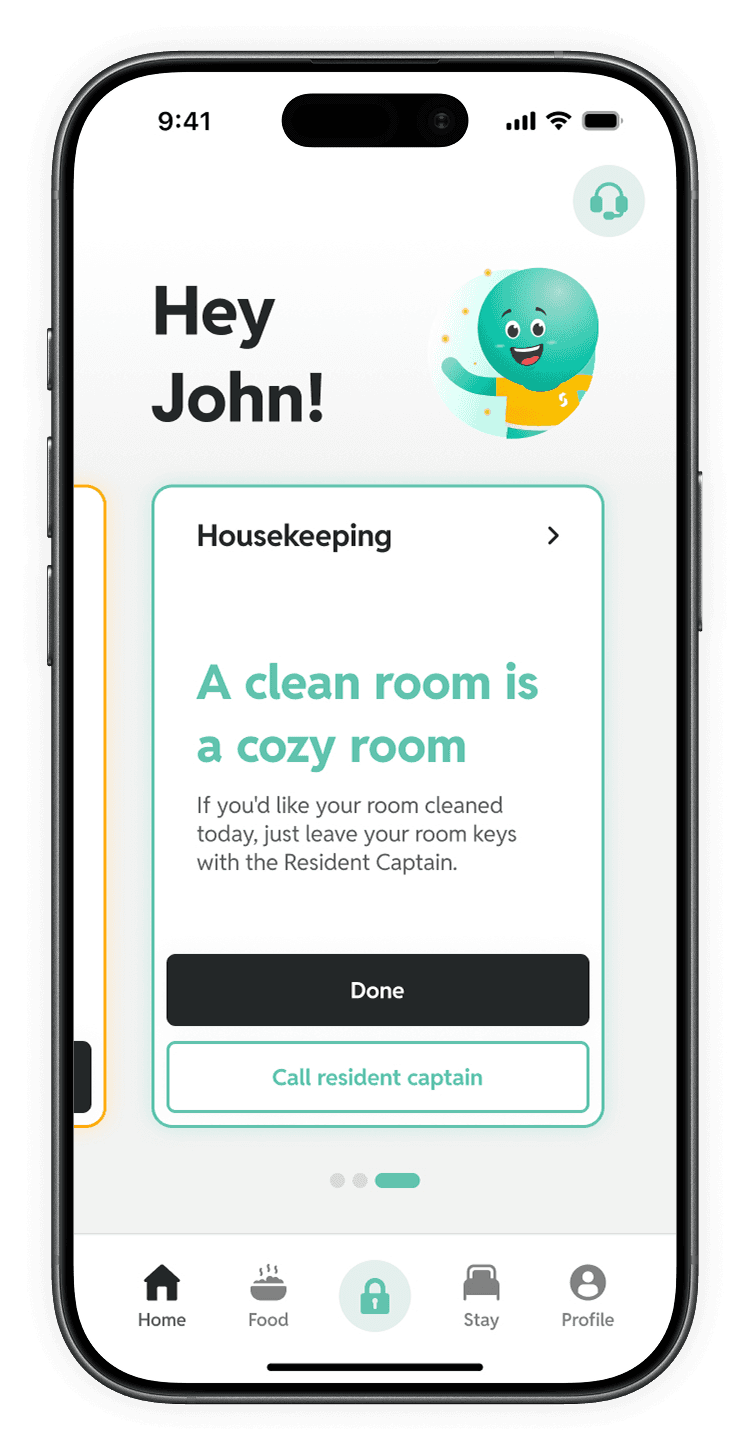
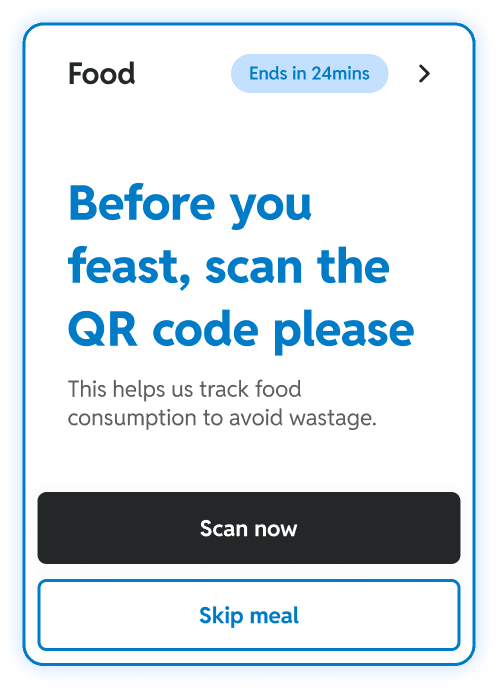
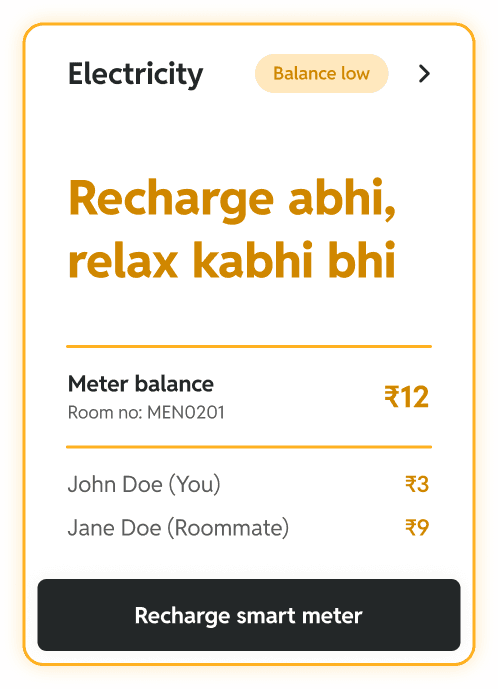
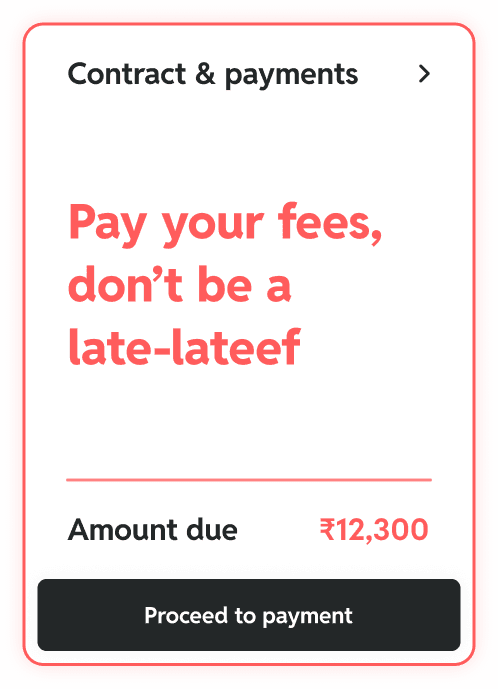
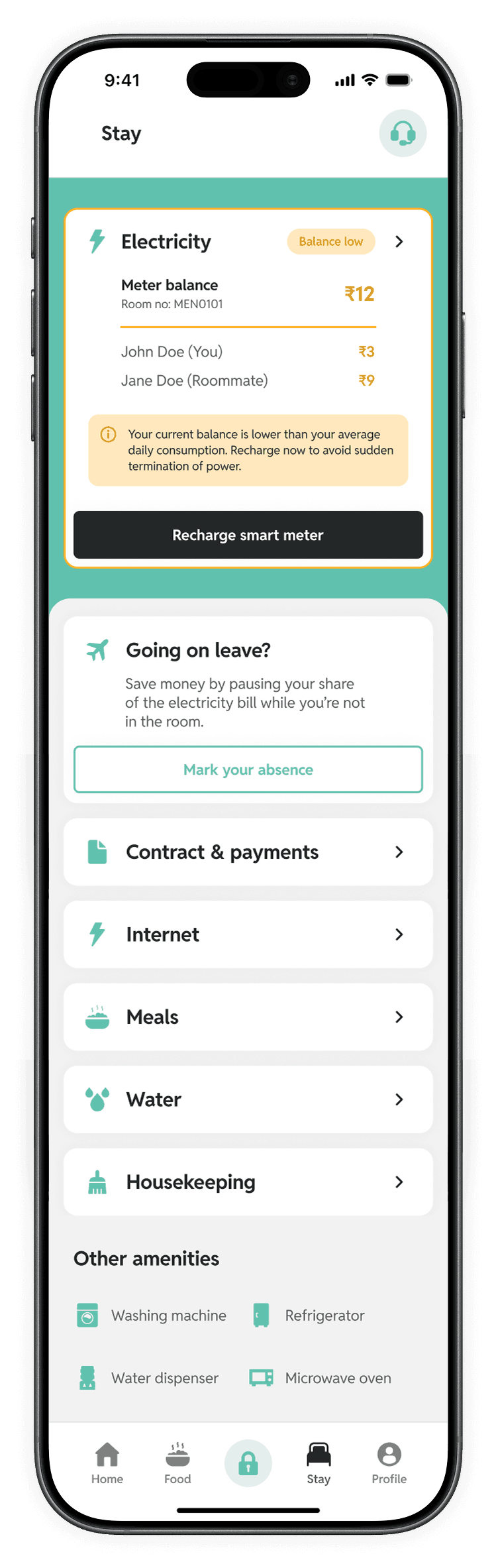
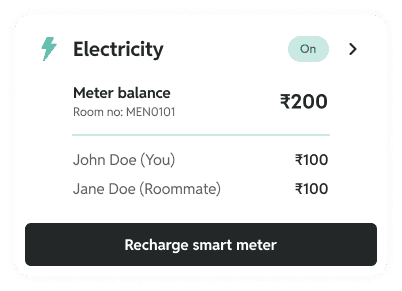
Prioritized the most frequent user task - recharging electricity meter & replaced static information with live data.
Elevated hidden but useful features - 'Going on leave? Pause electricity meter.'
Reduced information overload through progressive navigation.
Before
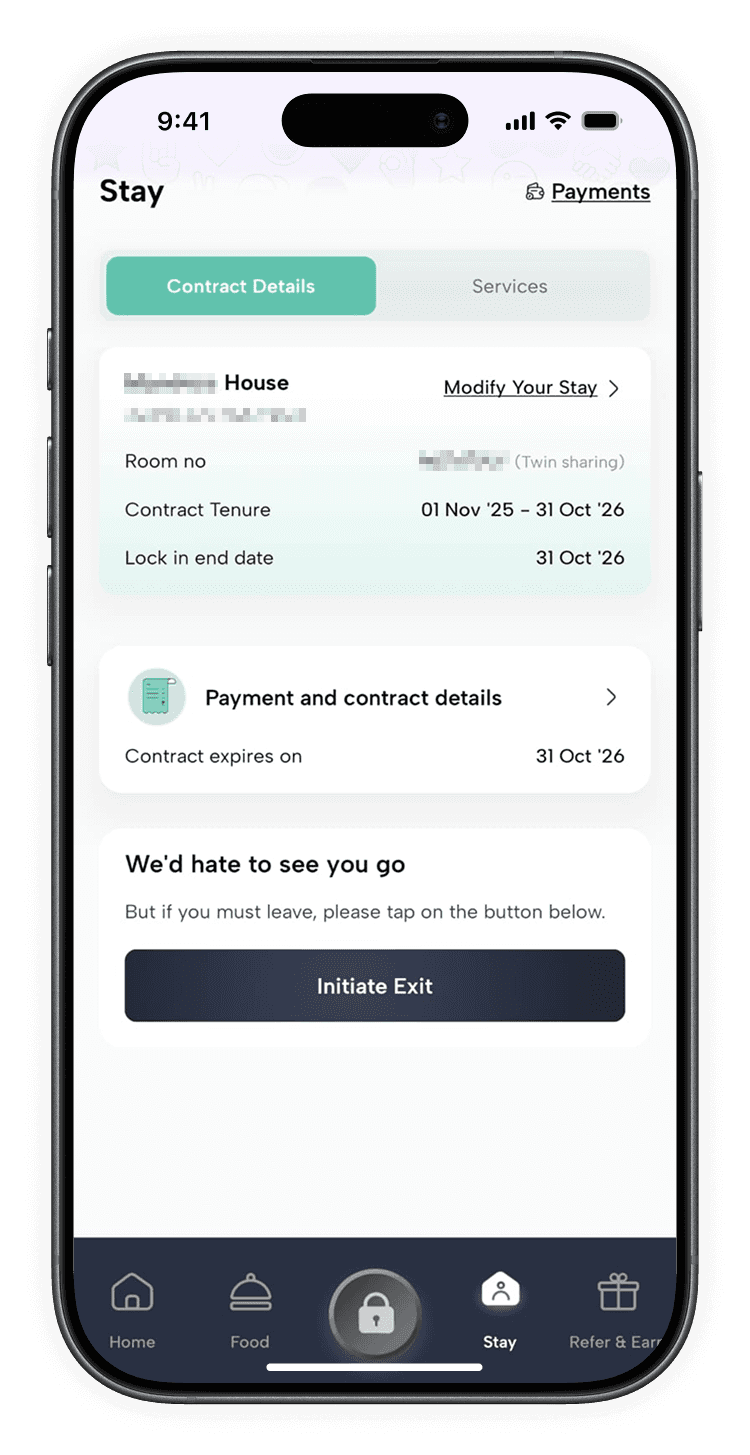
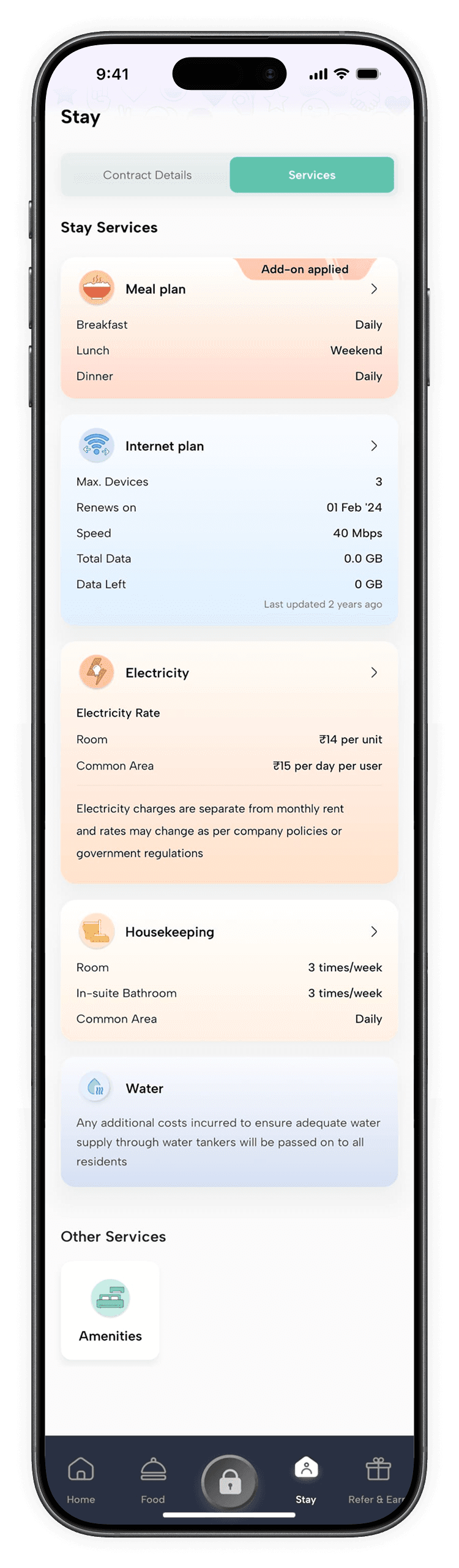
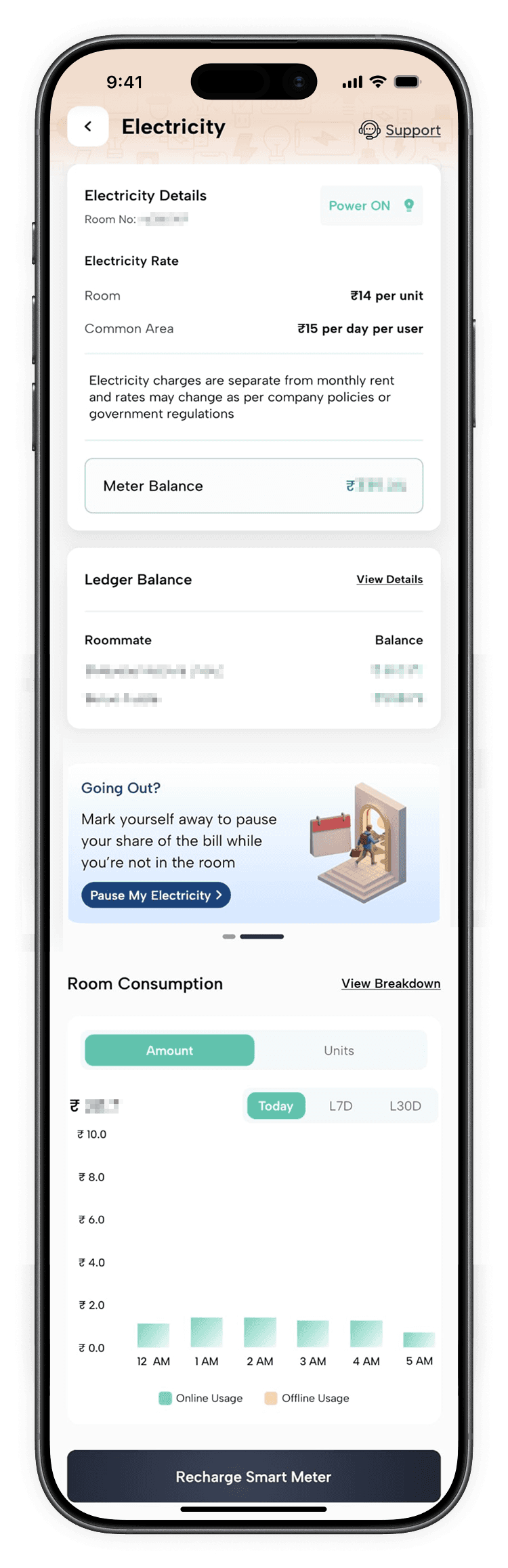
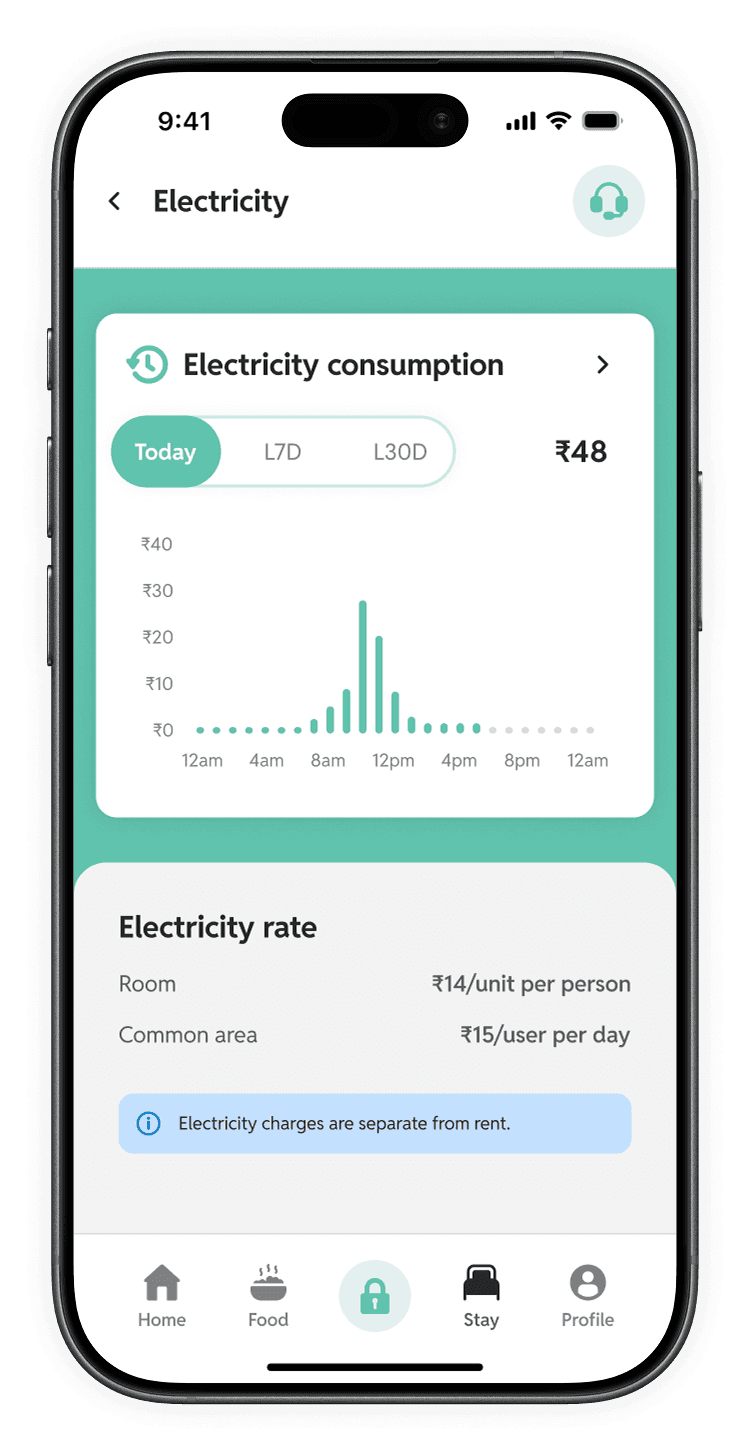
Removed redundant controls already surfaced on the stay page.
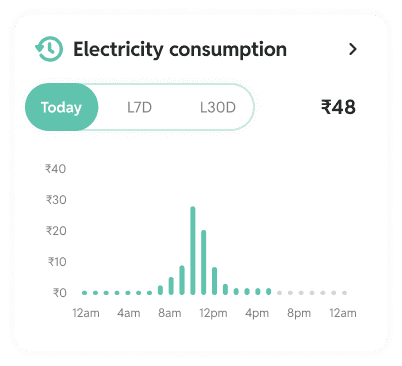
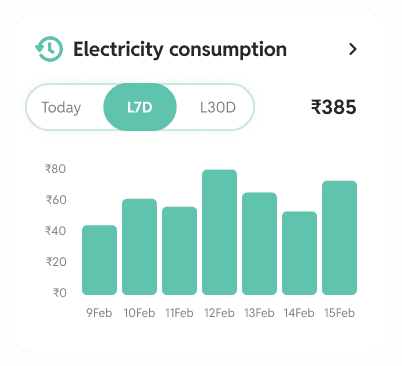
Prioritized live usage data over static information.
Simplified graphs for faster understanding.
Before
After
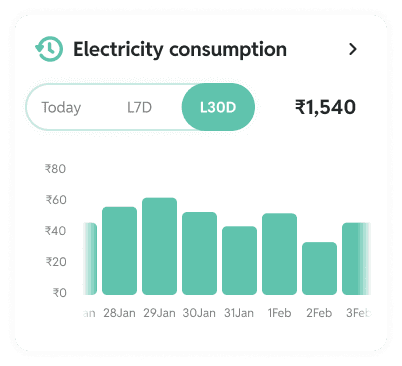
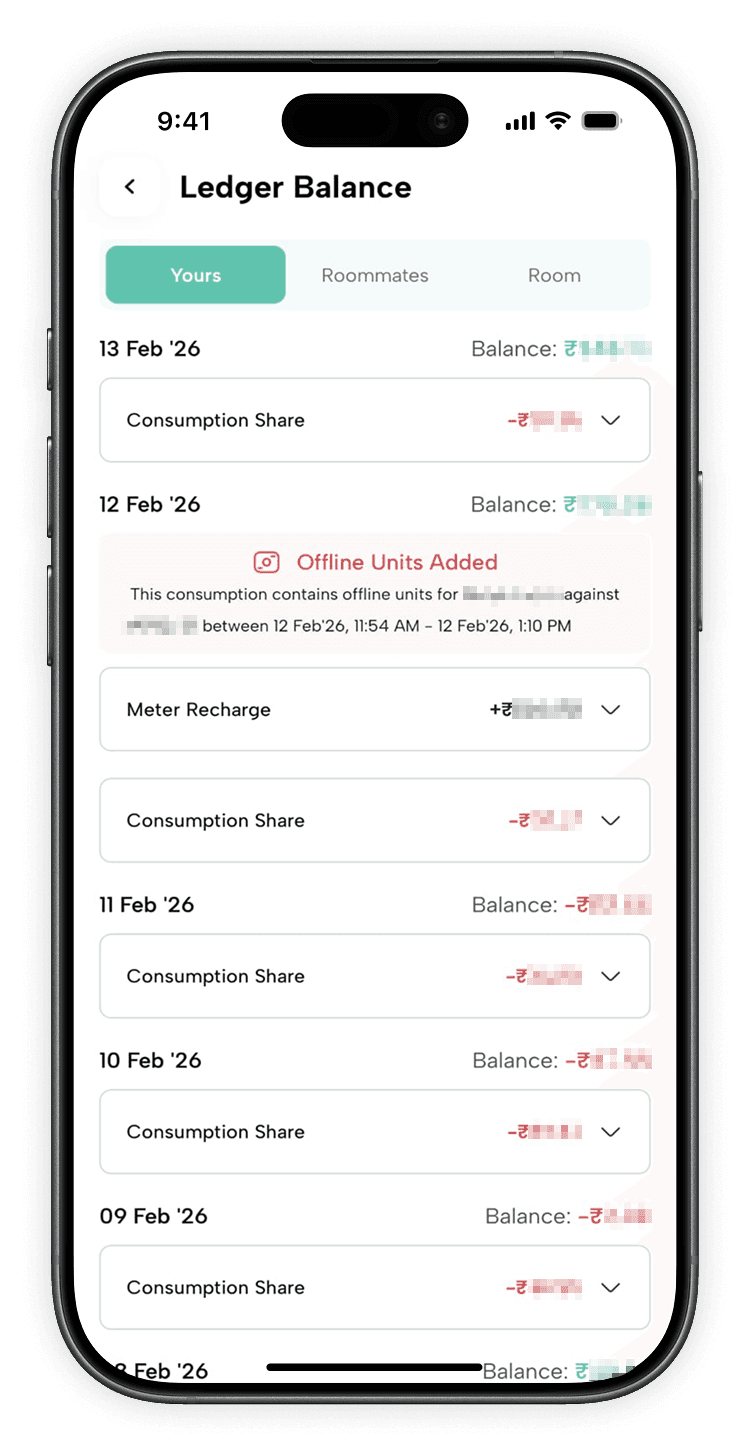
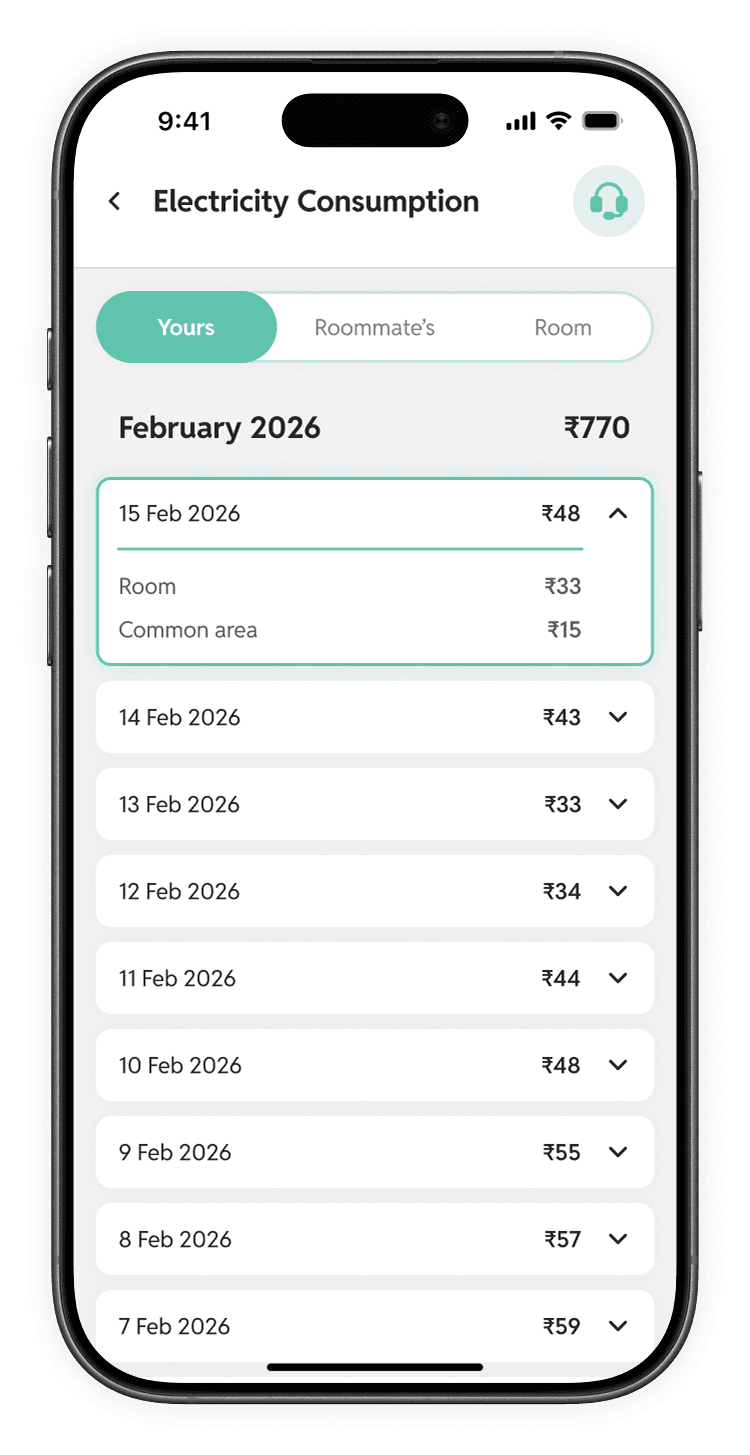
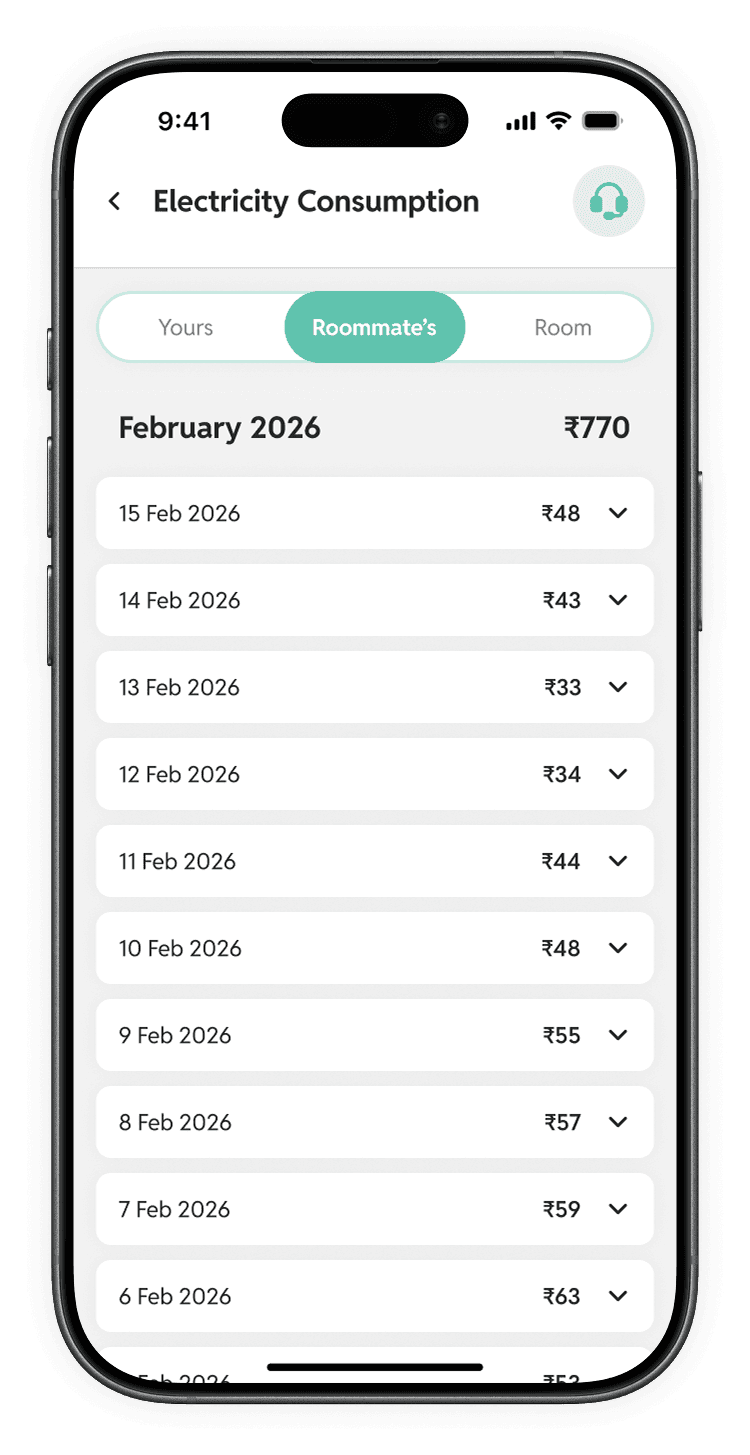
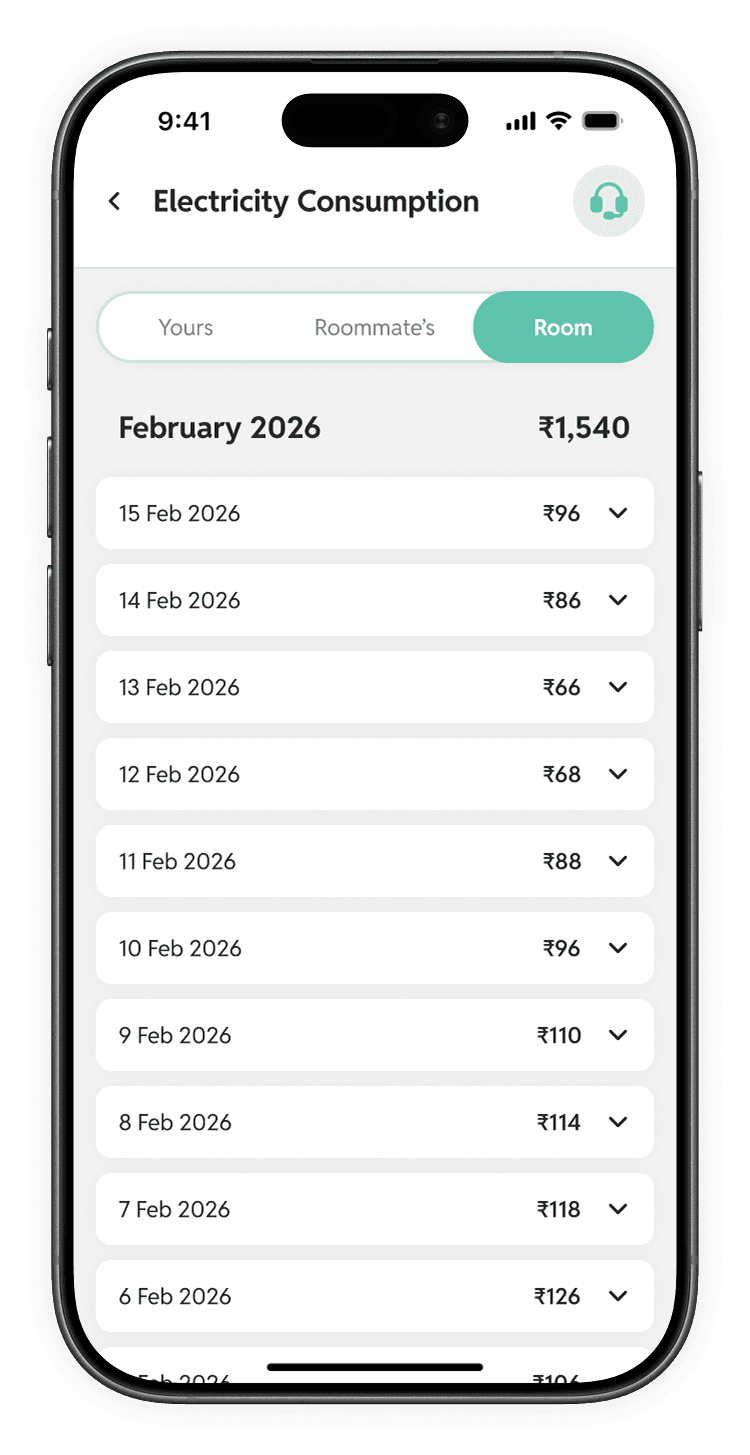
Prioritized key insights residents care about - per day consumption.
Made roommate comparisons easier.
Improved clarity through better labeling.
Before
After
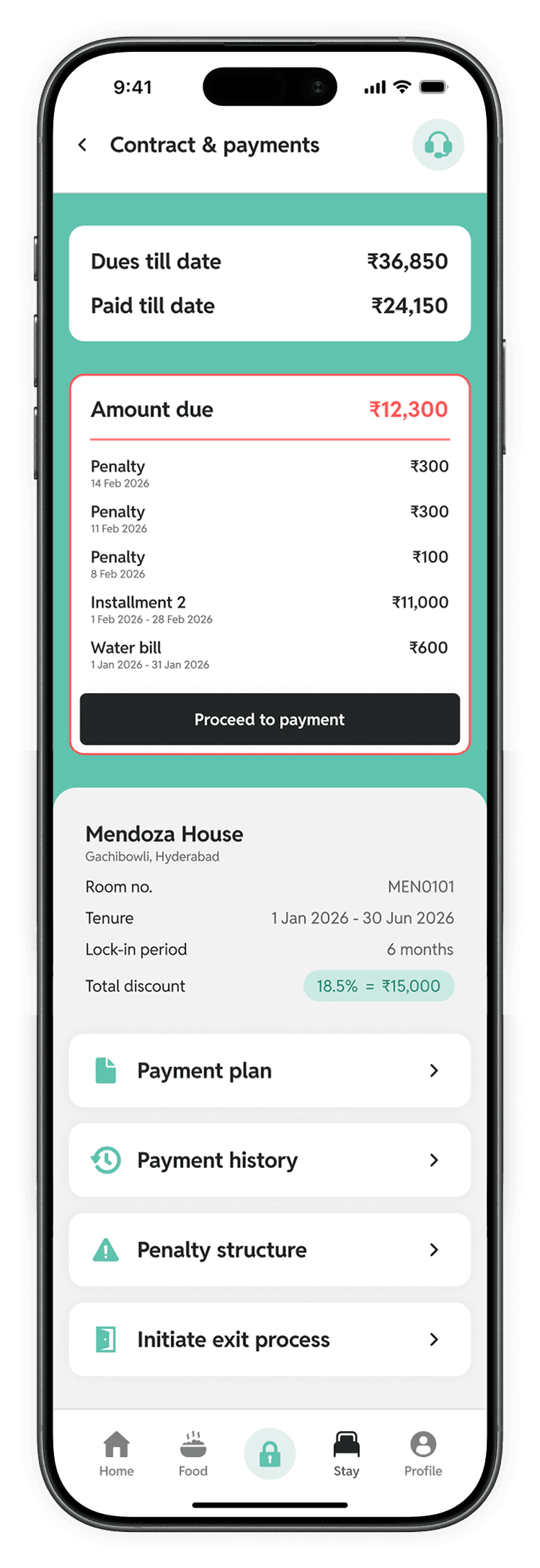
Prioritized key payment information.
Improved clarity & navigation through standardization.
Before
After
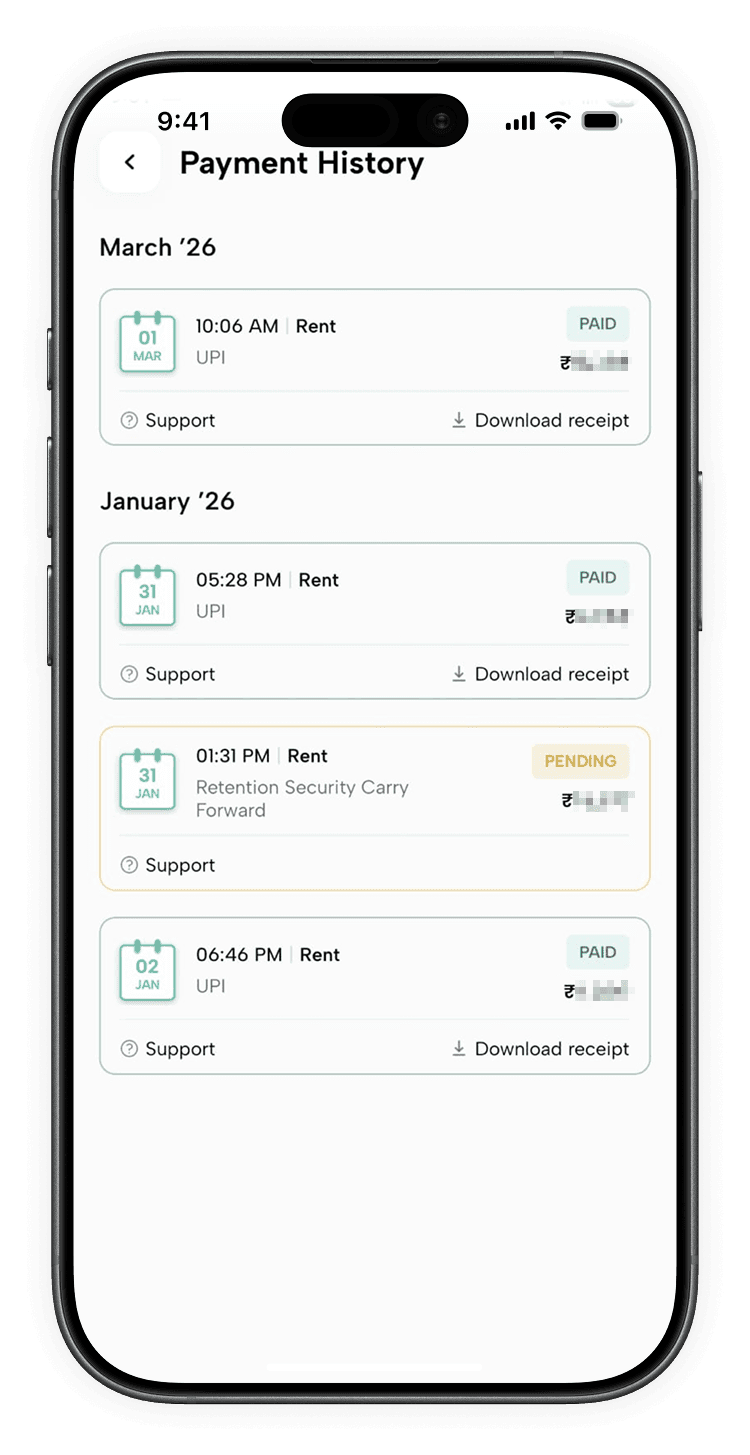
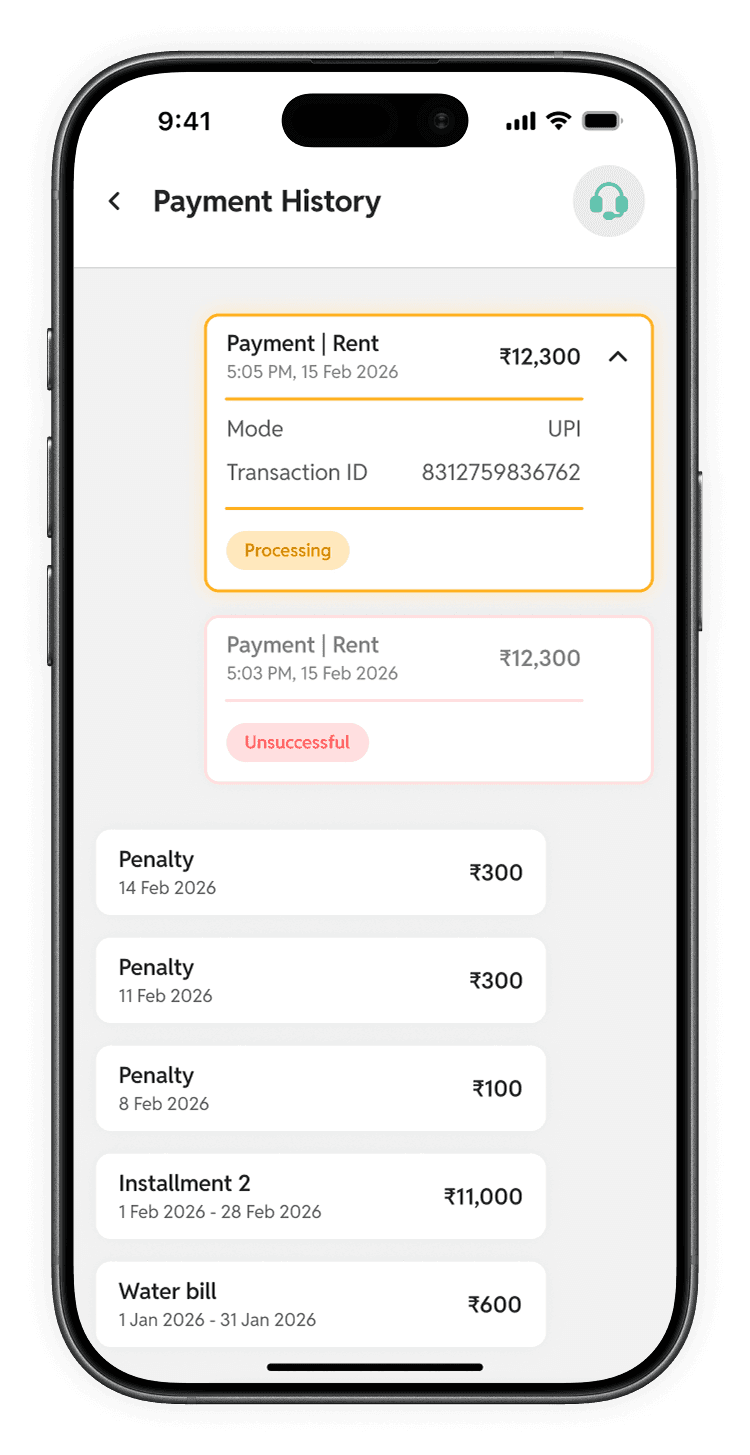
Unified fragmented payment information.
Improved clarity by introducing a conversational payment interface.
Before
After
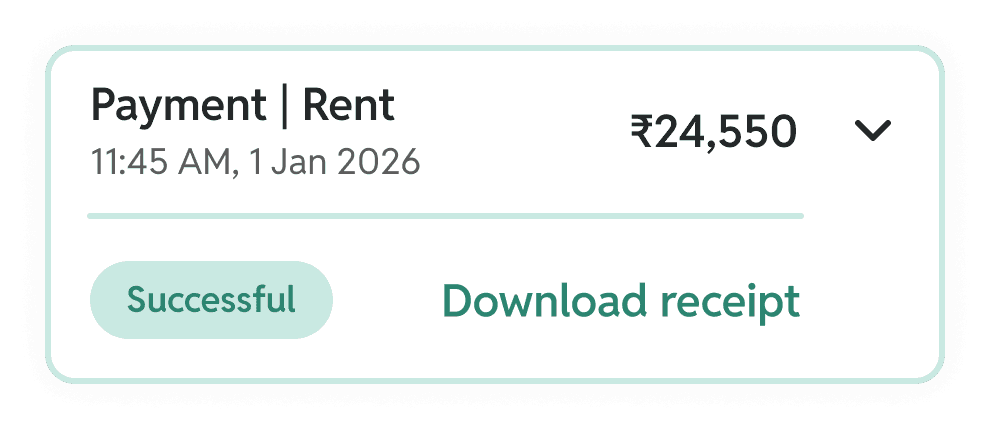
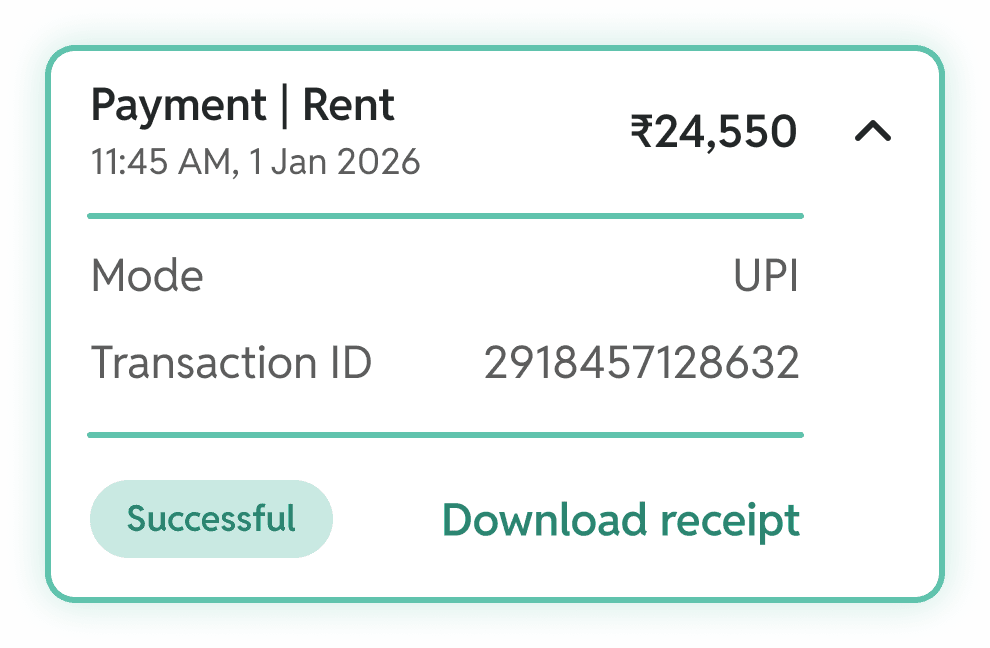
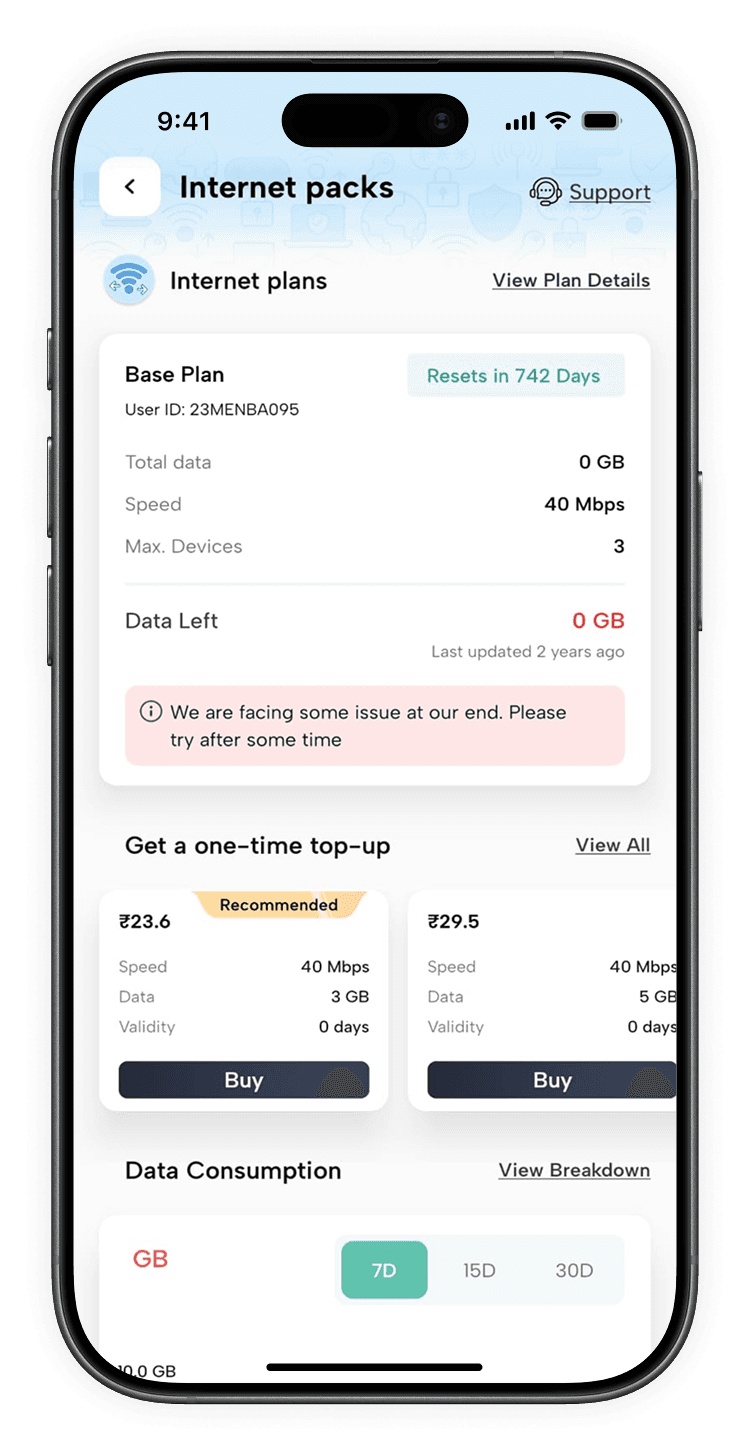
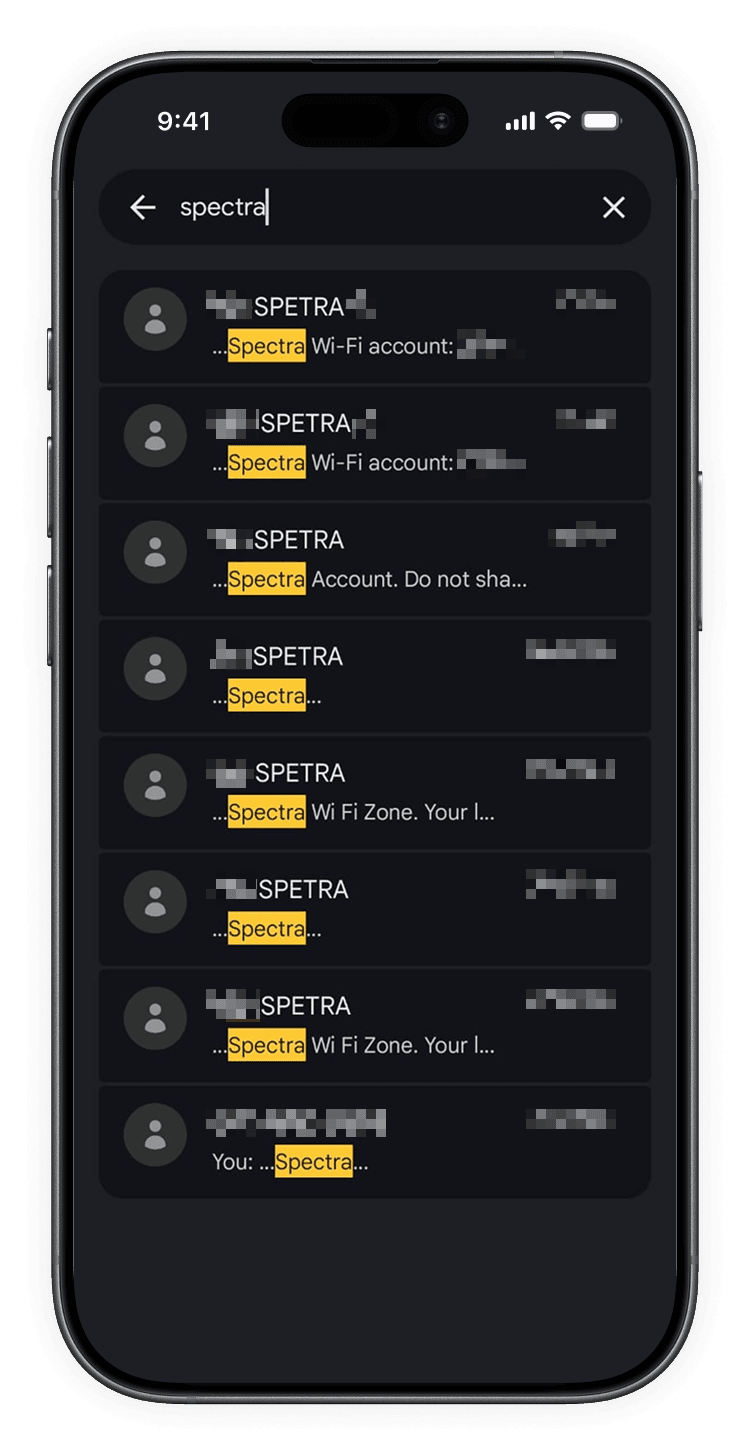
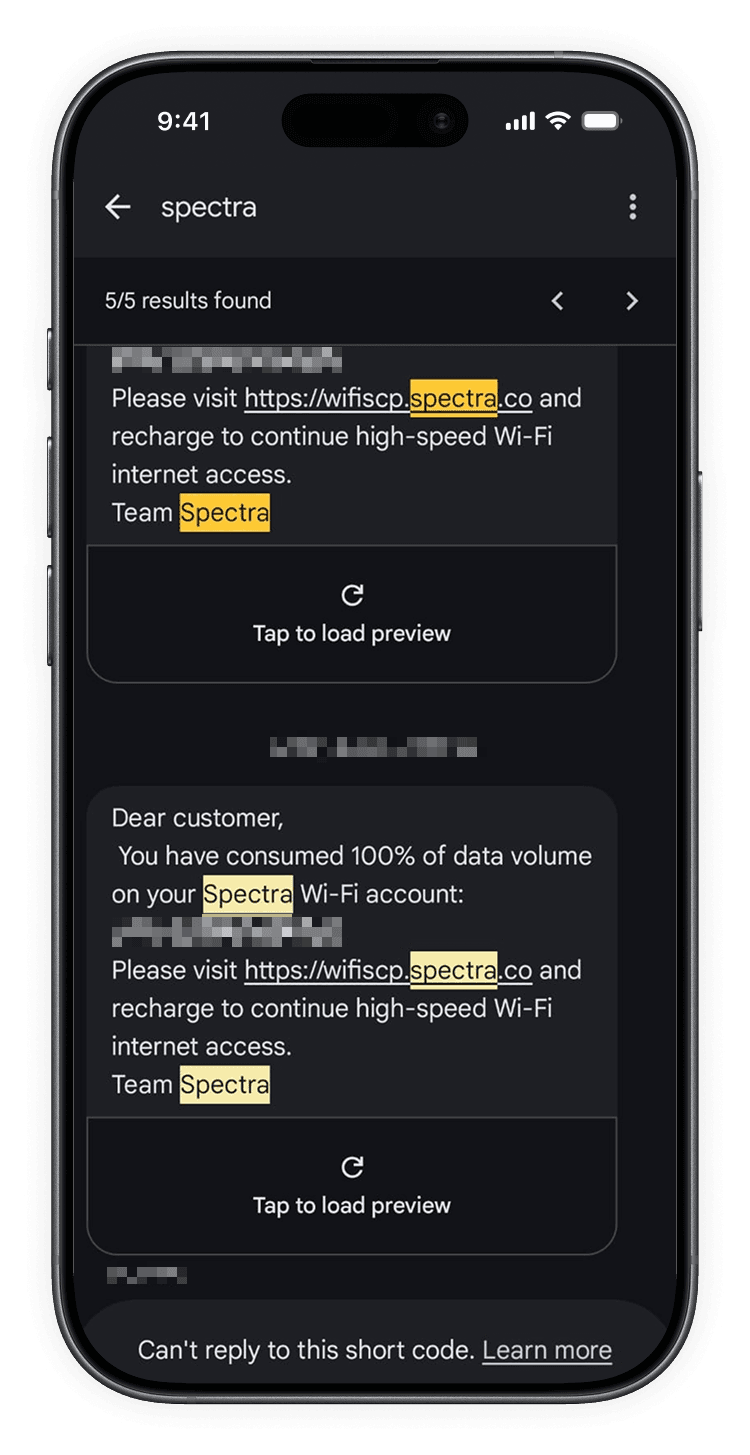
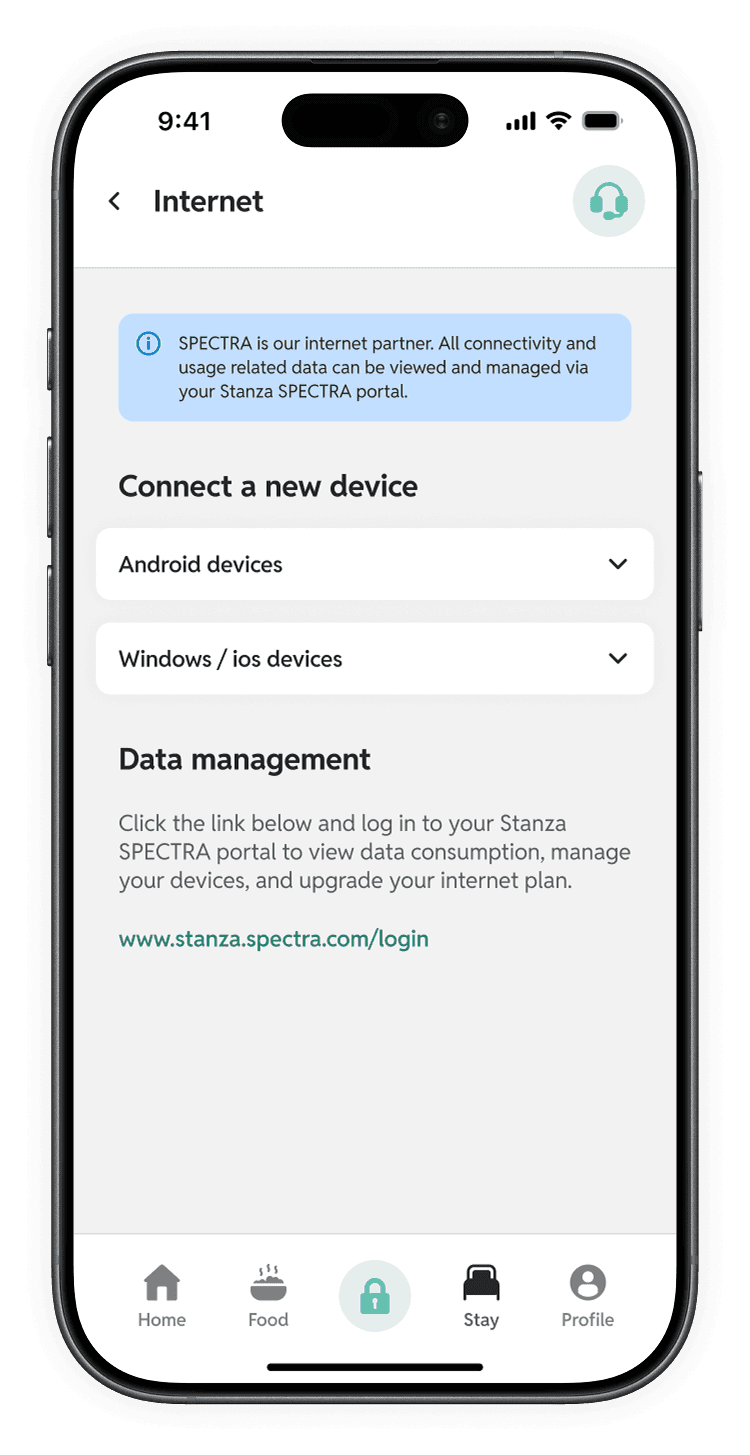
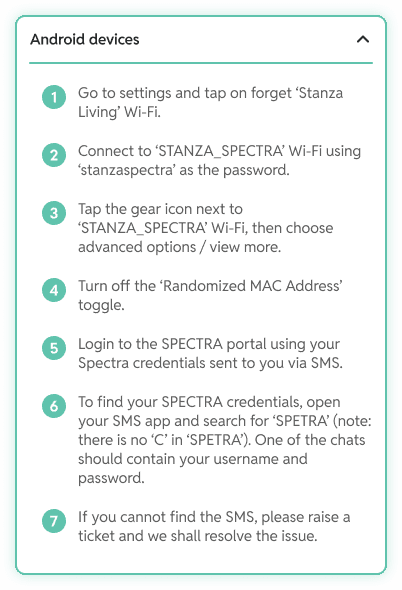
Removed misleading & incorrect usage data.
Prevented payments for unavailable services.
Reorganized information around user needs.
Reduced friction through a single, clear workflow.
Before
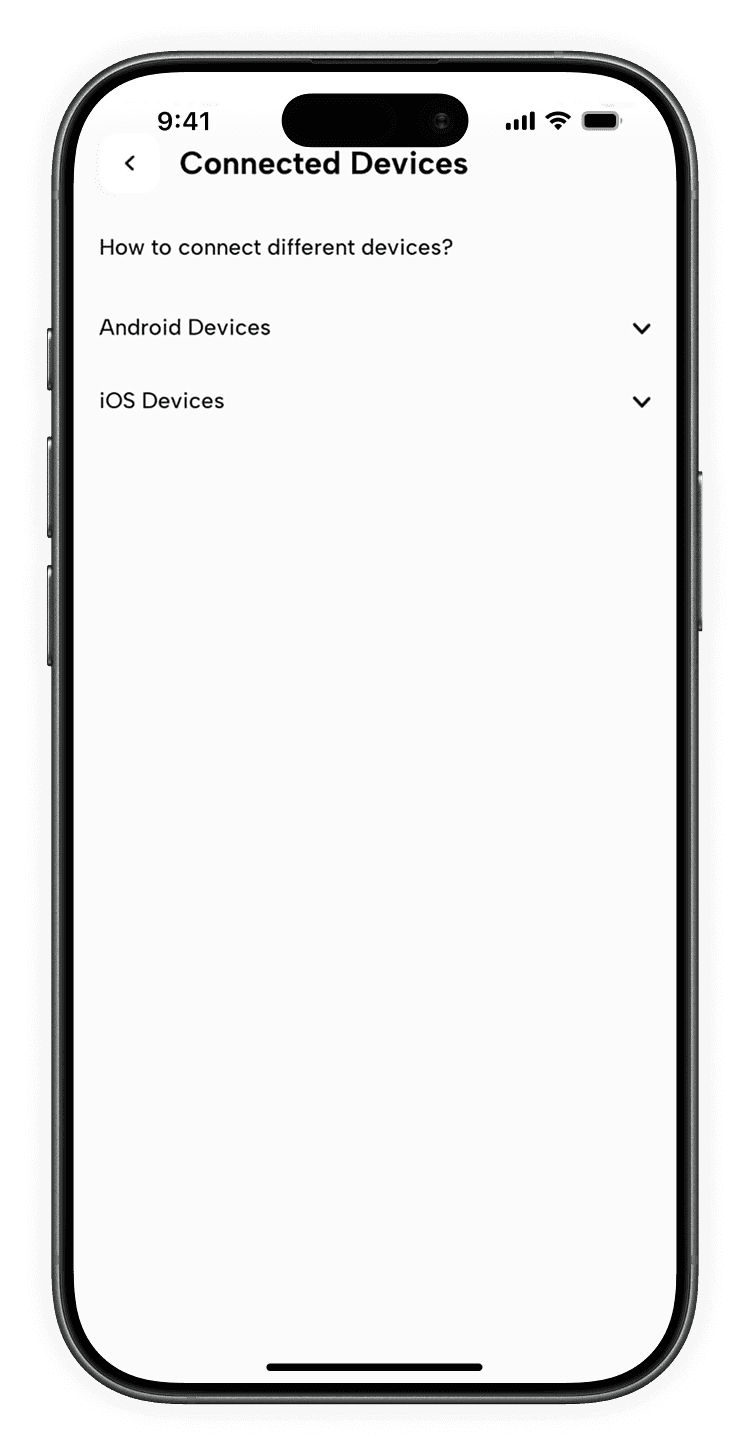
After

Consolidated food-related settings into a single page.
Reduced redundant navigation.
Before
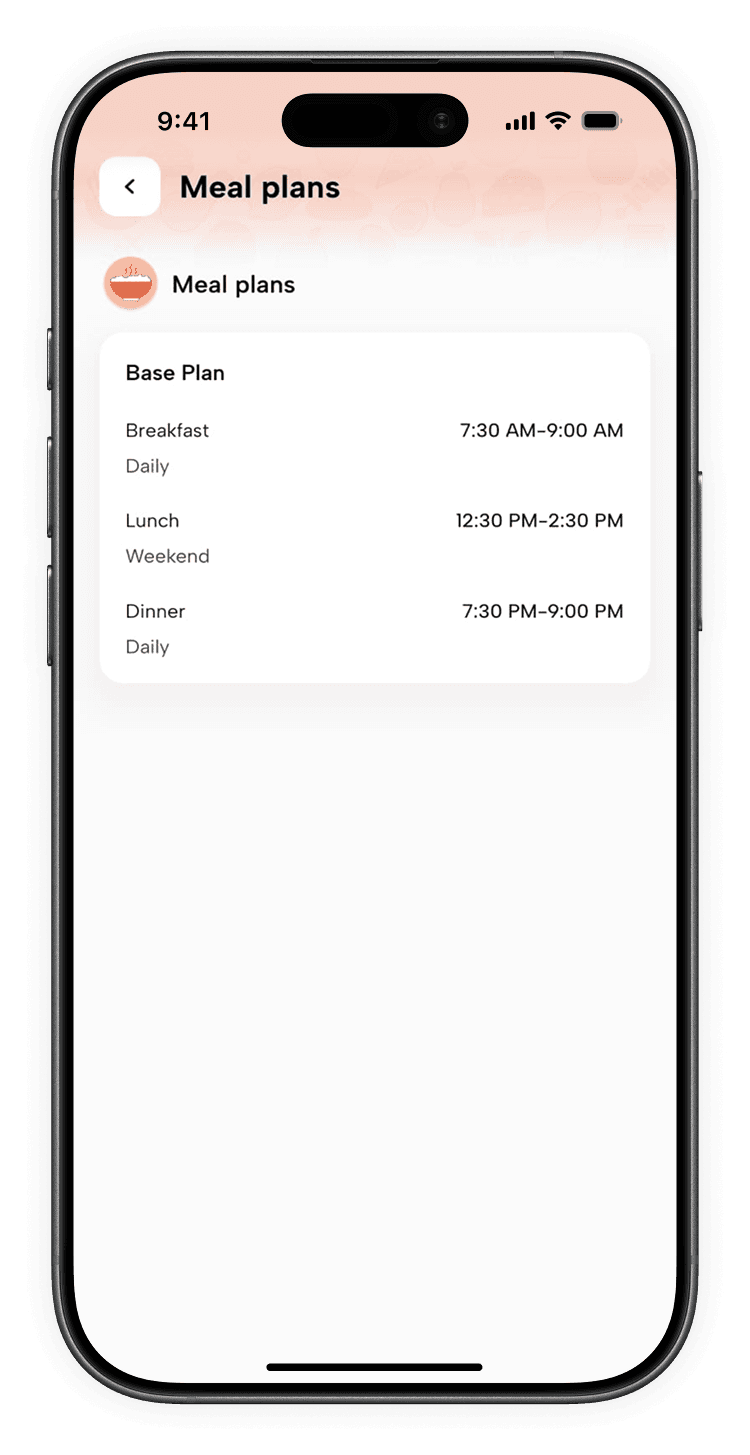
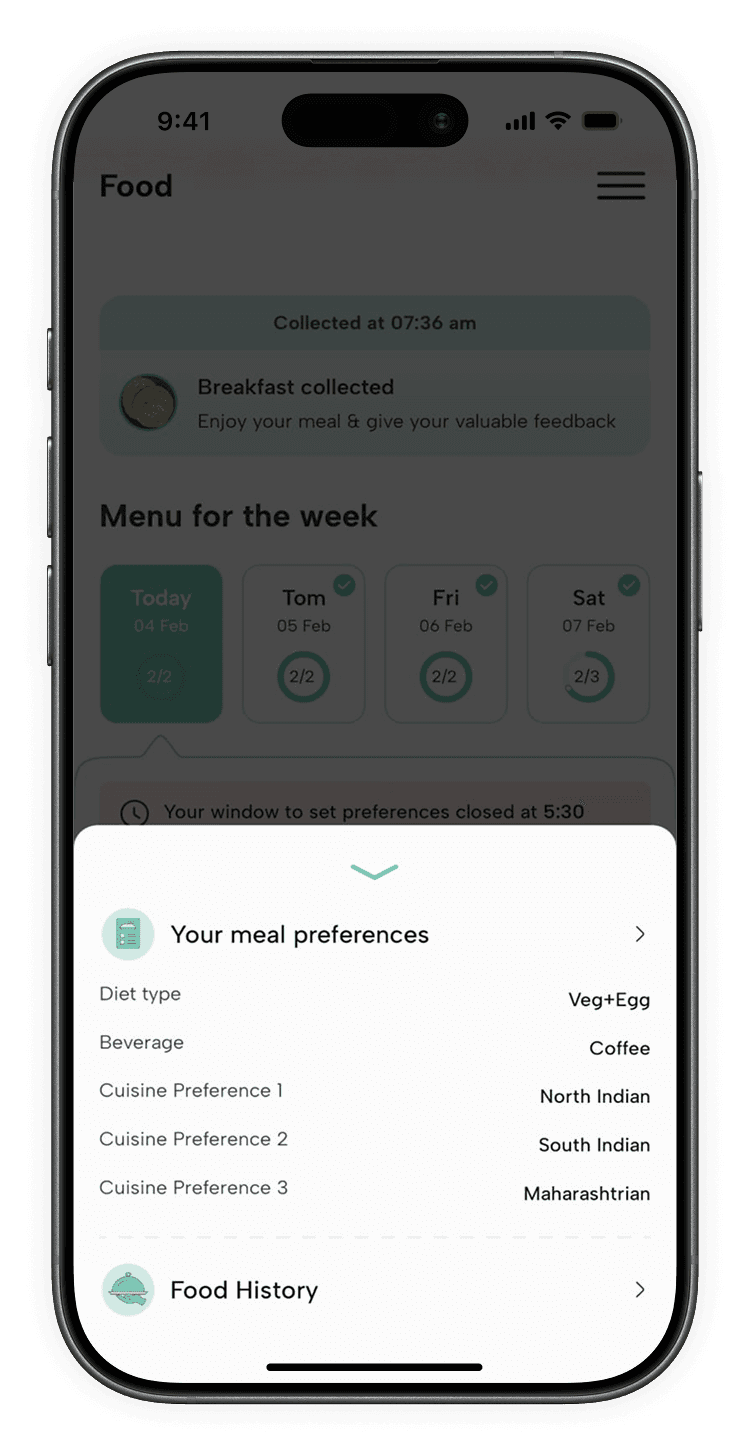
After
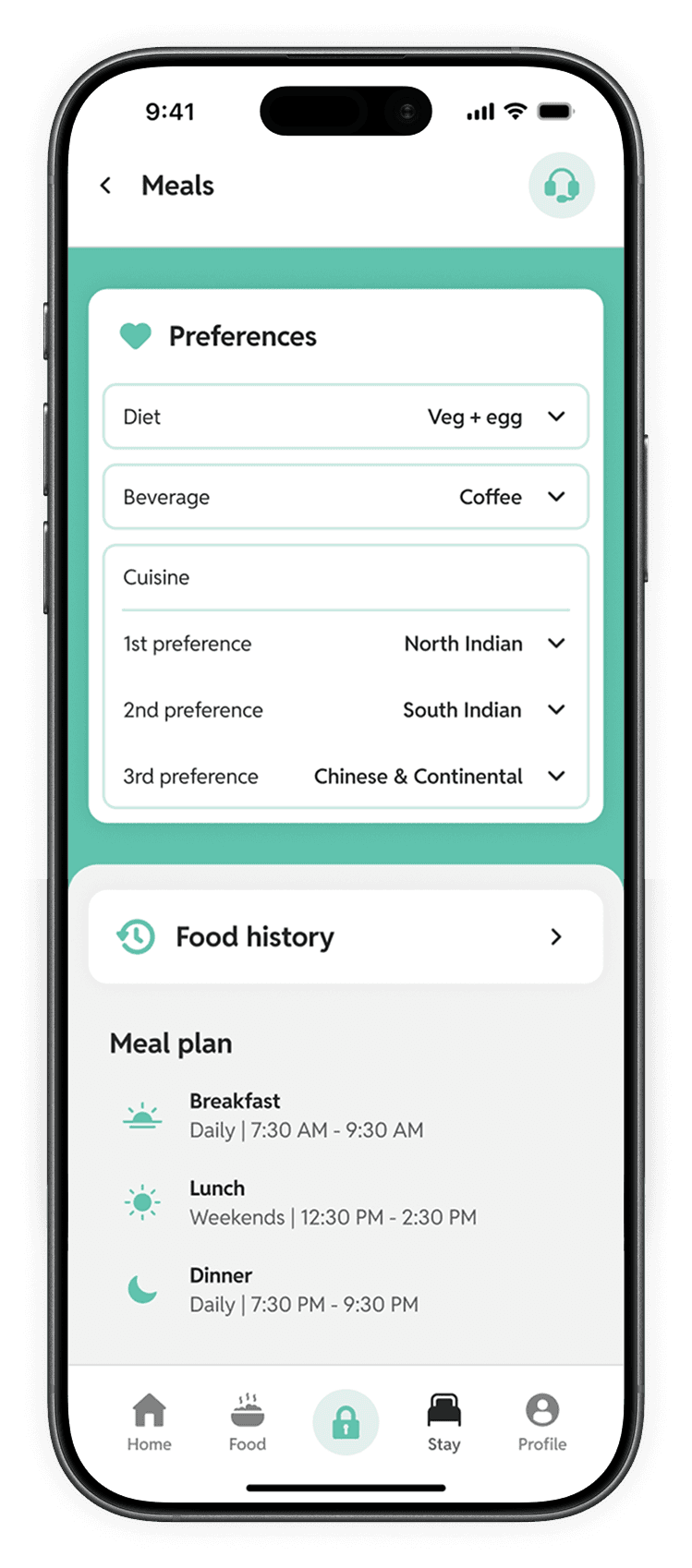
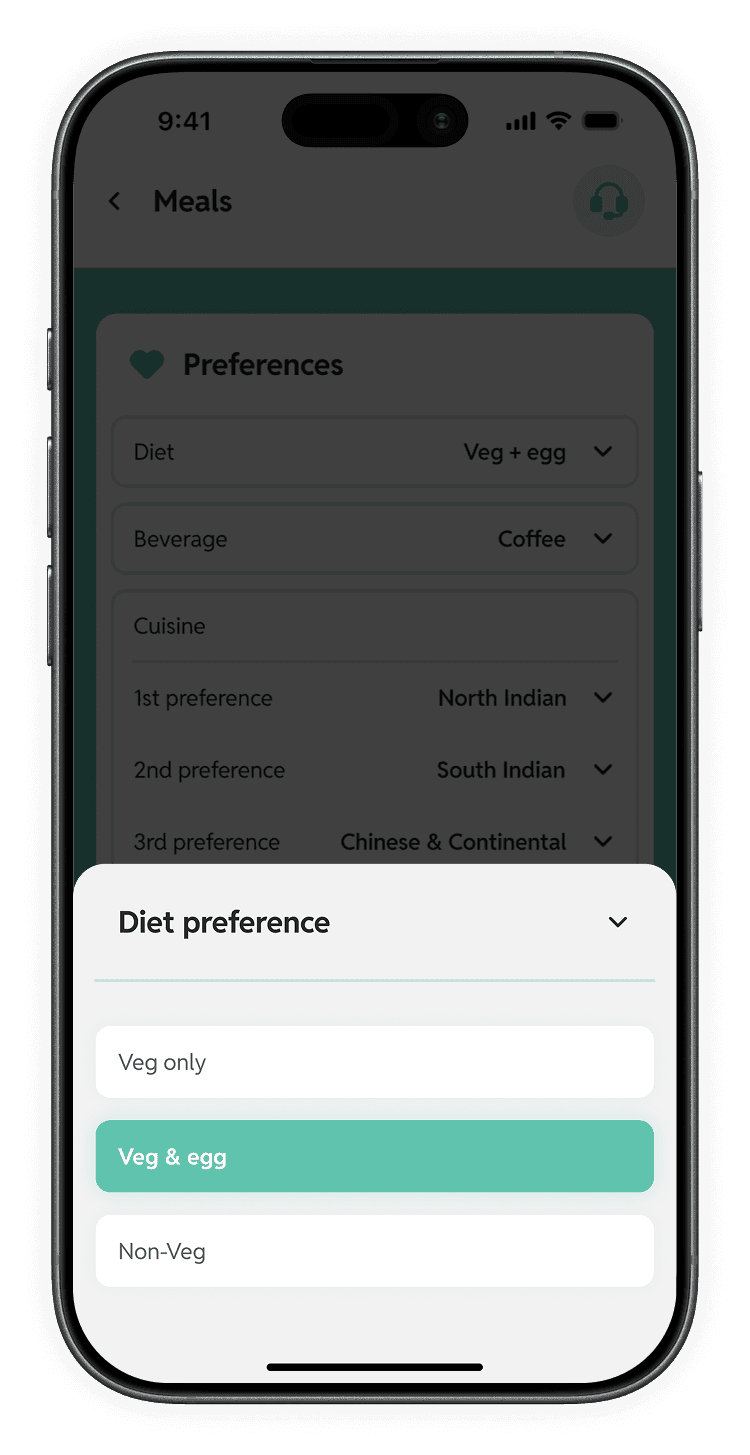
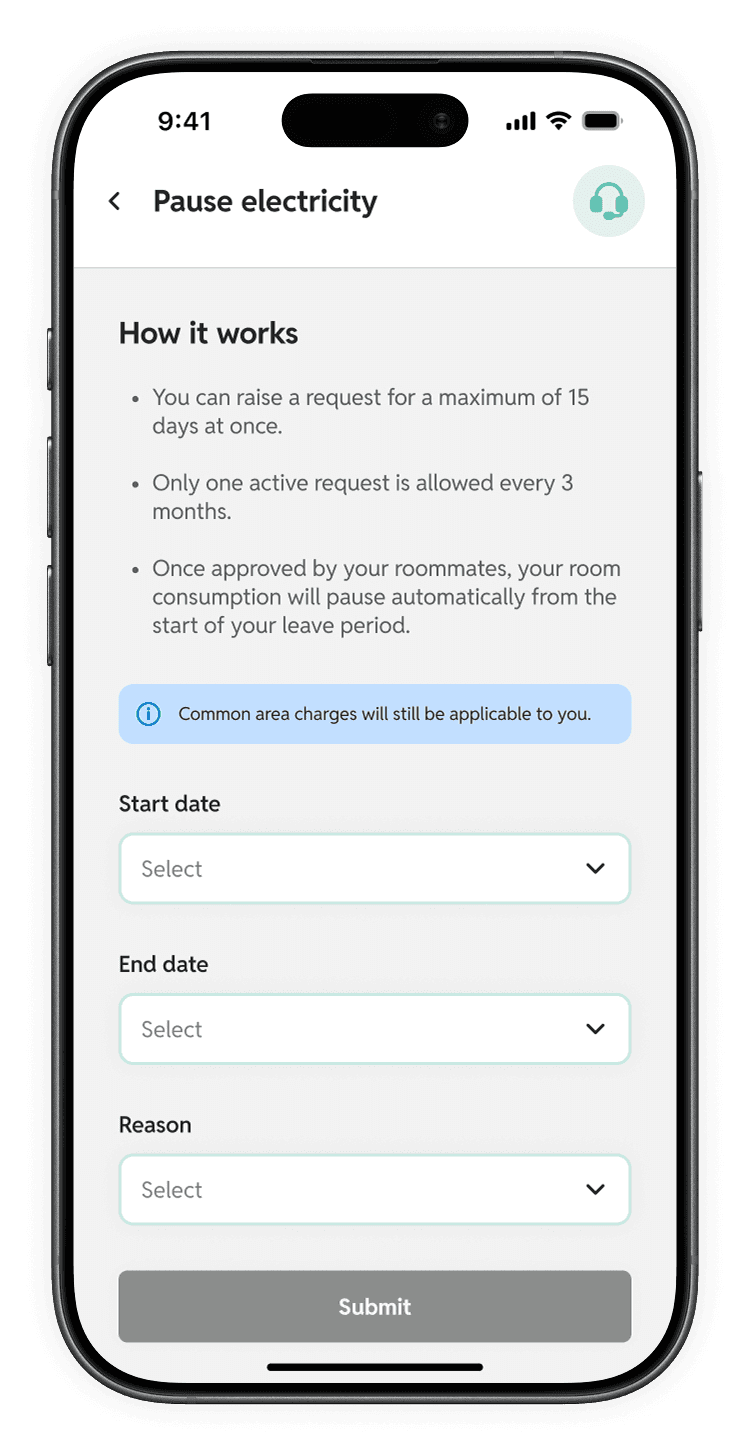
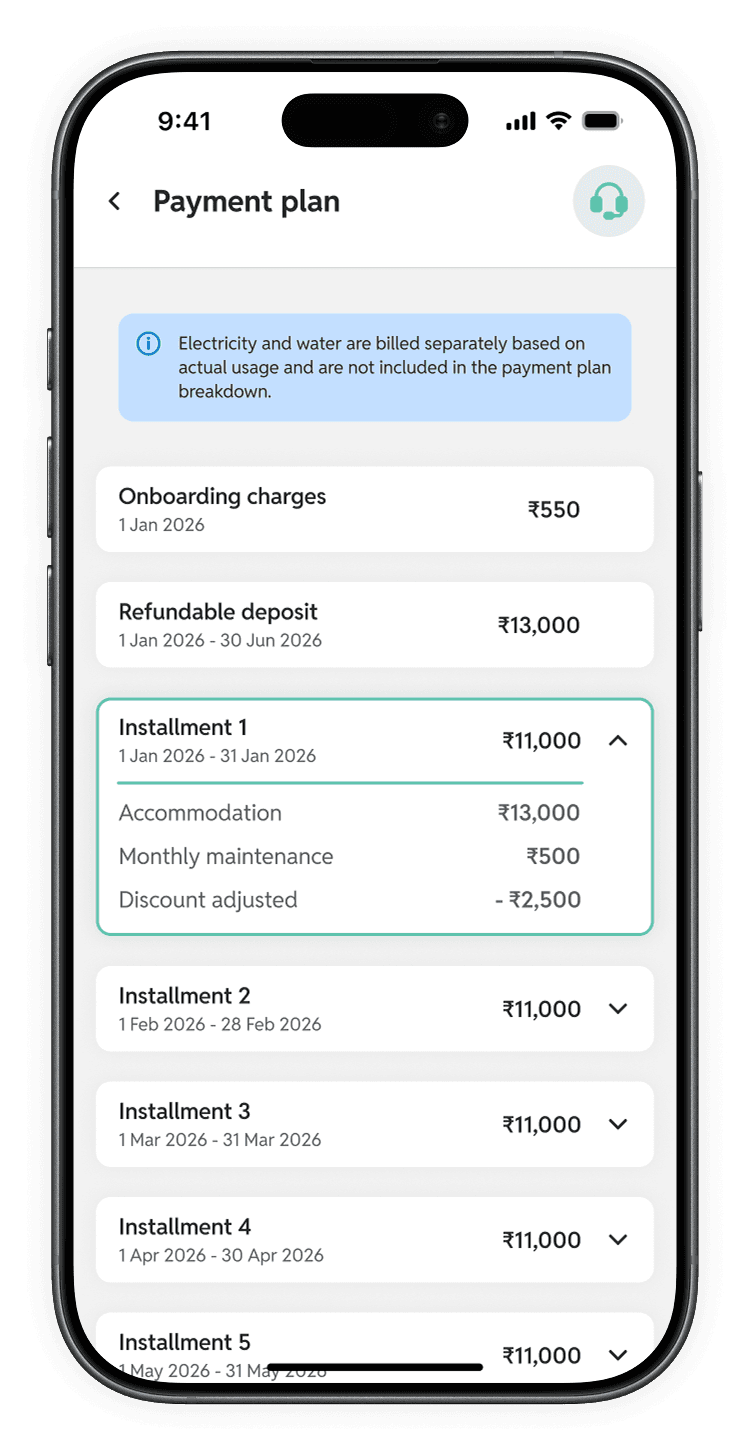
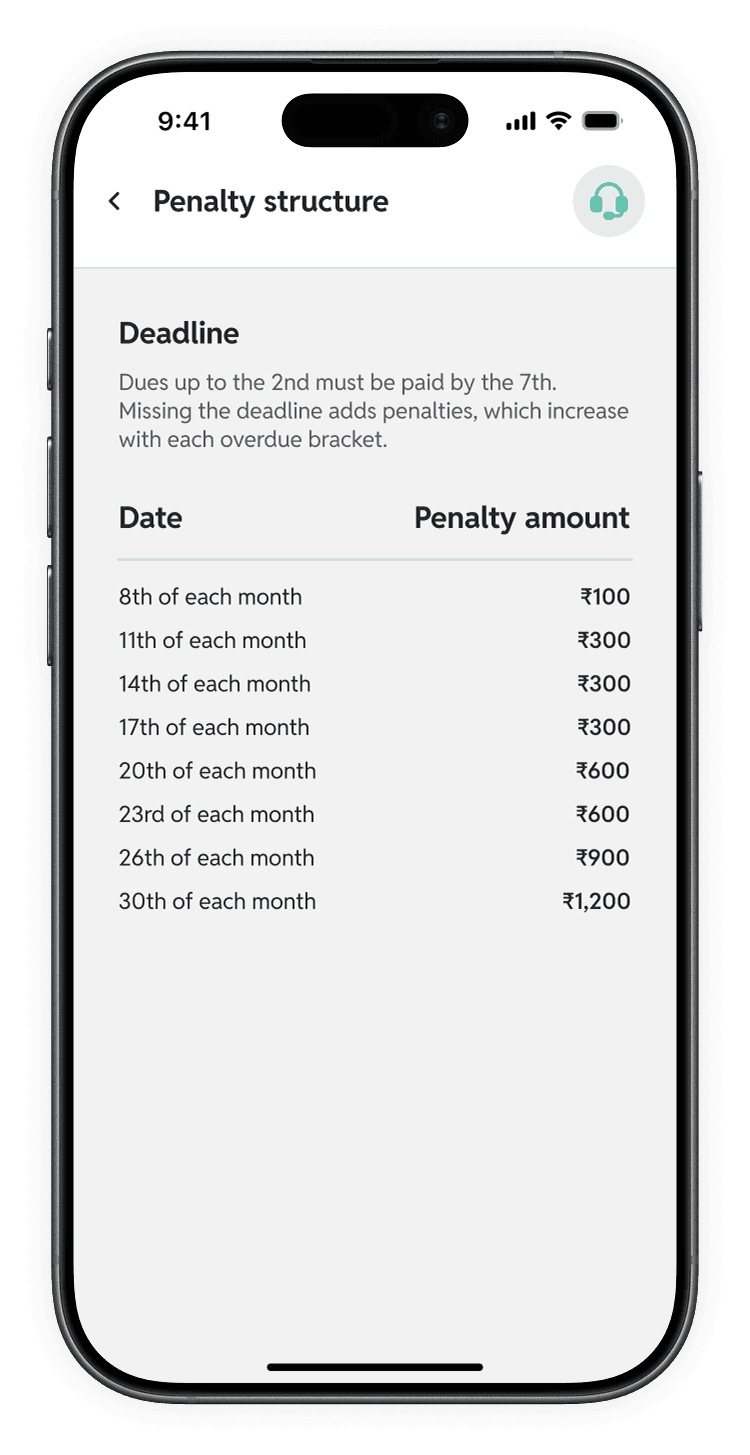
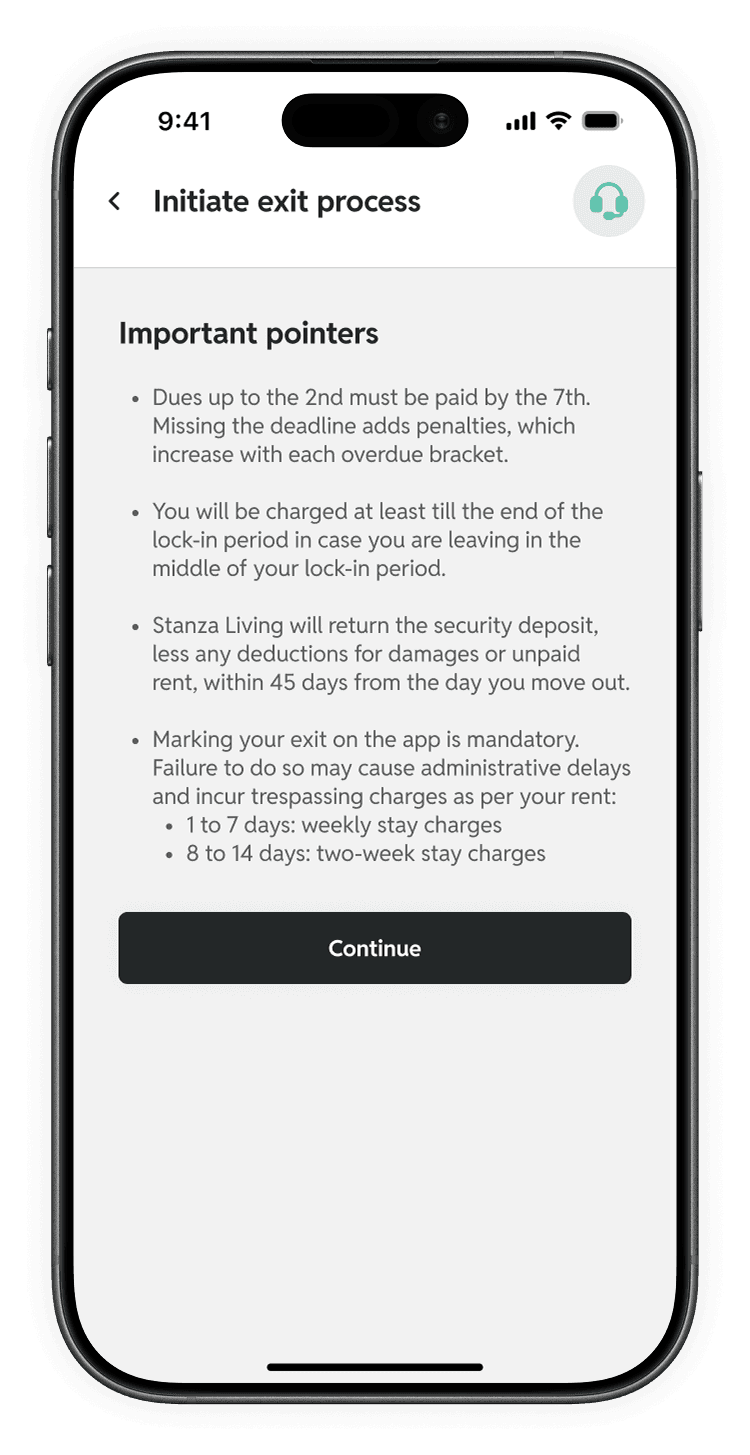
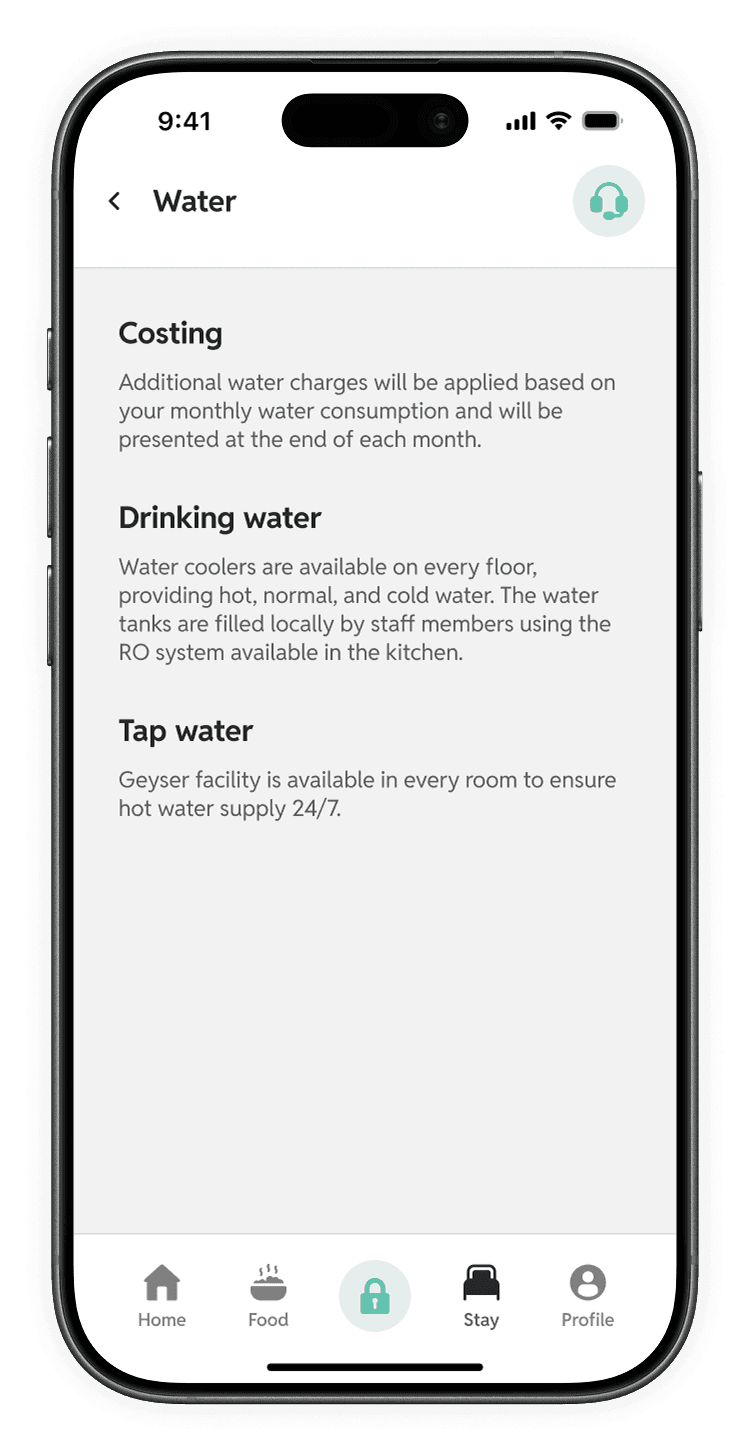
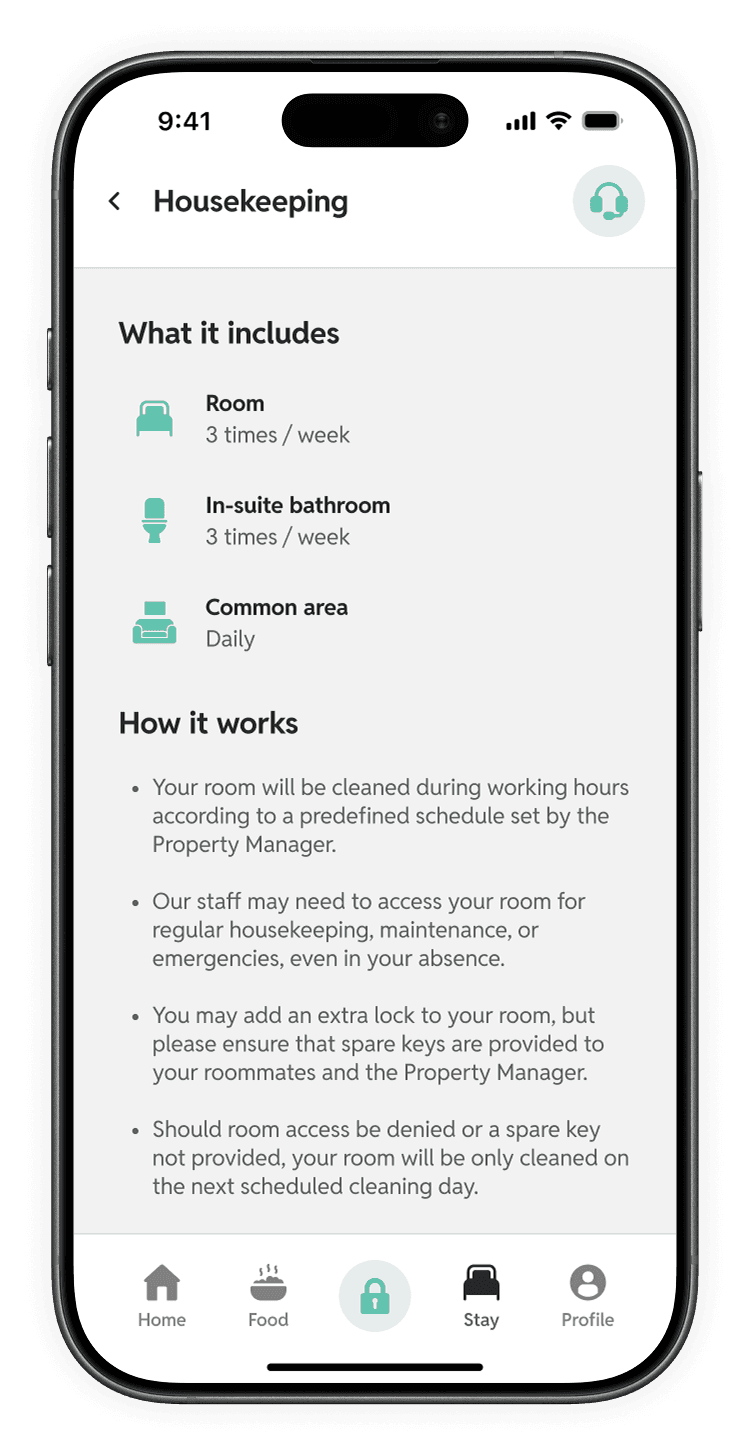
Aligned remaining pages with the new design system, refined UX writing & consolidated information.
01
Because the new city feels expensive,
We made the app UX feel more empathetic by elevating genuine cost conscious features.
We uplifted the UI to provide a more premium experience, inciting a "I'm getting my money's worth" feel.
02
Because the residents are time crunched,
We carried forward the card system into other pages of the app, showing what the user's need, when they need it.
We staggered the navigation, prioritizing live & current data over static information, reducing cognitive load.
03
Because the residents feel homesick,
We used regional UX writing to give the app more personality & feel homely.
04
What this means for Stanza Living:
Reduced operational overhead & staff intervention.
Improved feature visibility.
Stronger brand experience & trust from users.